Paver Patio Replacement · Troy

Paver Patio Replacement in Troy, MI

When an old stamped concrete or brick-on-sand patio is past saving, what a full tear out and rebuild to current standards looks like.

4 to 6 days installs · typical timeline
Free Quote

Free Paver Patio Replacement quote.

We reply within 1 business hour. No spam, ever.

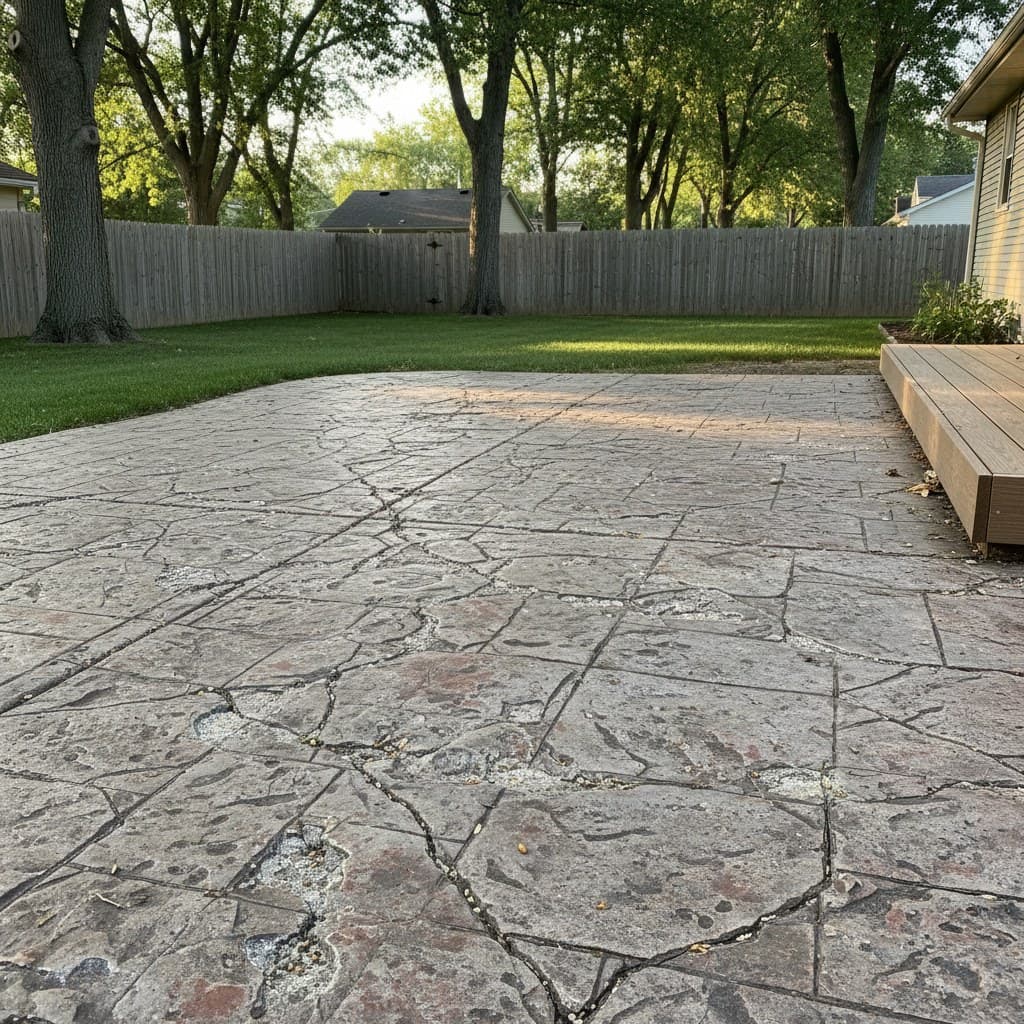
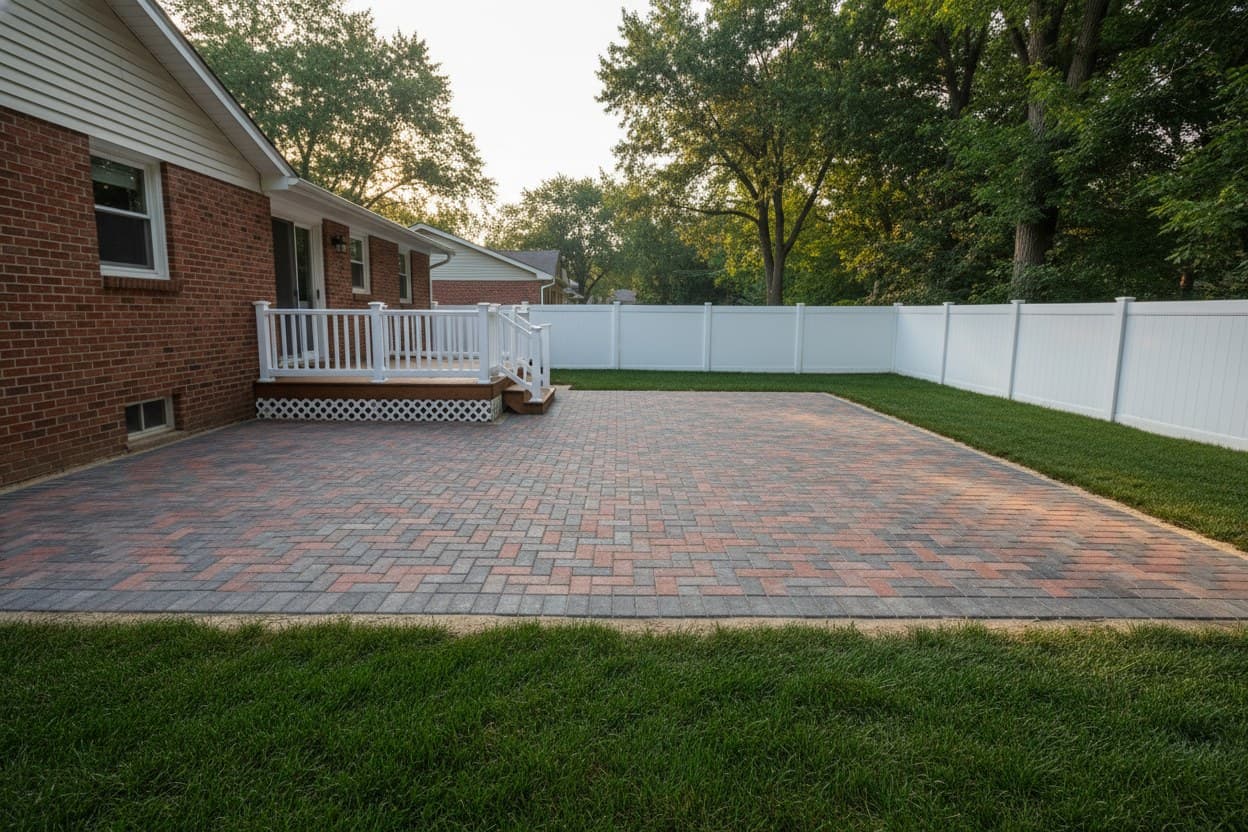
Cracked stamped concrete next to fresh paver patio.
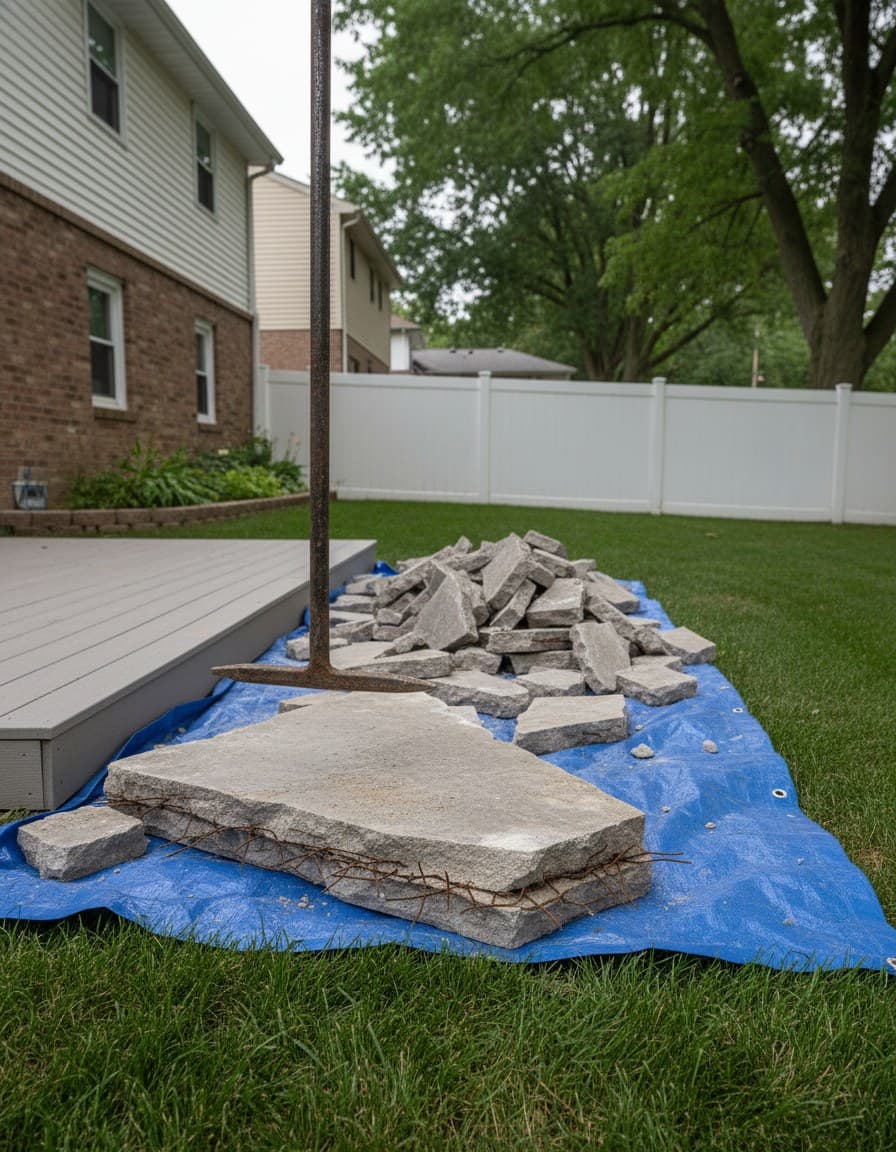
Failing stamped concrete patio scheduled for tear-out.
Mid-tearout shot, broken concrete in dump trailer.
What we install

When a patio needs to come out, not just be patched

Most Troy homes built between the 1980s and the early 2000s came with a stamped concrete or brick-on-sand back patio. After 20 to 30 years, those patios are at the end of their service life. The classic failure pattern for stamped concrete: large cracks through the slab, surface spalling where the stamp color has chipped off, sunken sections near the house, sealer worn off and never re-applied. The classic failure pattern for old brick-on-sand: pavers rocking under foot, joint sand long gone, weeds growing through every line, the field bowed up at corners from frost and roots. At that point, a partial repair throws good money after bad. The patio needs to come out.

A full replacement runs in three clear stages over 4 to 6 days. Day one is tear out: a skid steer with a hydraulic breaker fractures the old stamped concrete, or a crew pulls the old brick by hand and stacks the salvageable pavers on a pallet, and the underlying base gets exposed. Day two and three are base rebuild: the original base under a 20 year old patio has always migrated and decayed, so 6 to 8 inches of fresh crushed limestone goes down compacted in lifts. The new bedding sand gets screeded flat off rails. Day four through six are paver install: a fresh field of 60mm Unilock or Belgard pavers laid in herringbone or running bond, cut to the patio outline, edge restraints anchored, polymeric sand swept and watered in. The new patio meets current ICPI standards, which are stronger than what most original patios in Troy were built to.

  • Full tear out and haul, never a paver install over the top of a failing surface.
  • Base rebuild with fresh 6 to 8 inches of crushed limestone, compacted in lifts to spec.
  • Anchored edge restraints replace the no-edge installs common in older brick-on-sand patios.
  • 60mm Unilock, Belgard, Techo-Bloc, or Cambridge pavers, with manufacturer lifetime structural warranty.
  • Polymeric sand joints replace the mason sand that washed out of the original patio.
Once a stamped patio has cracked into 5 or more pieces or an old brick patio has weeds in every joint, no patch saves it. The patio is at the end of its service life.

Most replacement jobs across Troy, Royal Oak, Birmingham, Bloomfield Hills, Rochester, Rochester Hills, and Madison Heights run 4 to 6 days from breaker on the old surface to polymeric sand on the new field. The crew that handles the lead writes a fixed price for the demo, haul, base, pavers, and finish before any work starts. A bid that just gives a square foot price without breaking out the tear out cost is the one missing the layers that matter.

If a Troy patio is past patching, send a couple of photos through the form and a local contractor will book a free on-site walk through. The quote covers the full job from tear out through final polymeric sand, with the price written down before work starts.
Materials

What is different about a replacement versus a fresh install

A replacement is a fresh install with a tear out and a base rebuild in front of it. That changes both the timeline and the cost. The tear out itself is the work most homeowners underestimate. An old 300 square foot stamped concrete patio weighs about 14,000 pounds. It has to be broken up, loaded into a trailer, and hauled to a recycling facility. Most Michigan counties now require recycled concrete aggregate disposal rather than landfill. The breaker work is fast on a residential patio, usually a half day. The haul is hours of skid steer loading and a couple of dump trips to the aggregate recycler.

The base rebuild is the second piece that distinguishes a replacement from a fresh install. The original base under a 20 year old patio has had decades to break down. Clay migrates up into the limestone. The limestone itself breaks down into smaller fragments under freeze and thaw. Drainage swales clog or fill in. So the base under a replacement gets stripped, regraded, and topped with a full 6 to 8 inches of fresh crushed limestone, compacted in lifts the same way a fresh install gets done. Trying to reuse the existing base under new pavers is the most common shortcut on cheap replacement bids. It shows up as new settling within the first year.

  • Tear out and haul to a recycling facility is the line item that bumps cost over a fresh install.
  • Base rebuild with 6 to 8 inches of fresh crushed limestone, never a reuse of the legacy base.
  • No-edge old installs get anchored edge restraints in the rebuild.
  • 60mm modern pavers replace the often-thinner pavers of the 1990s.
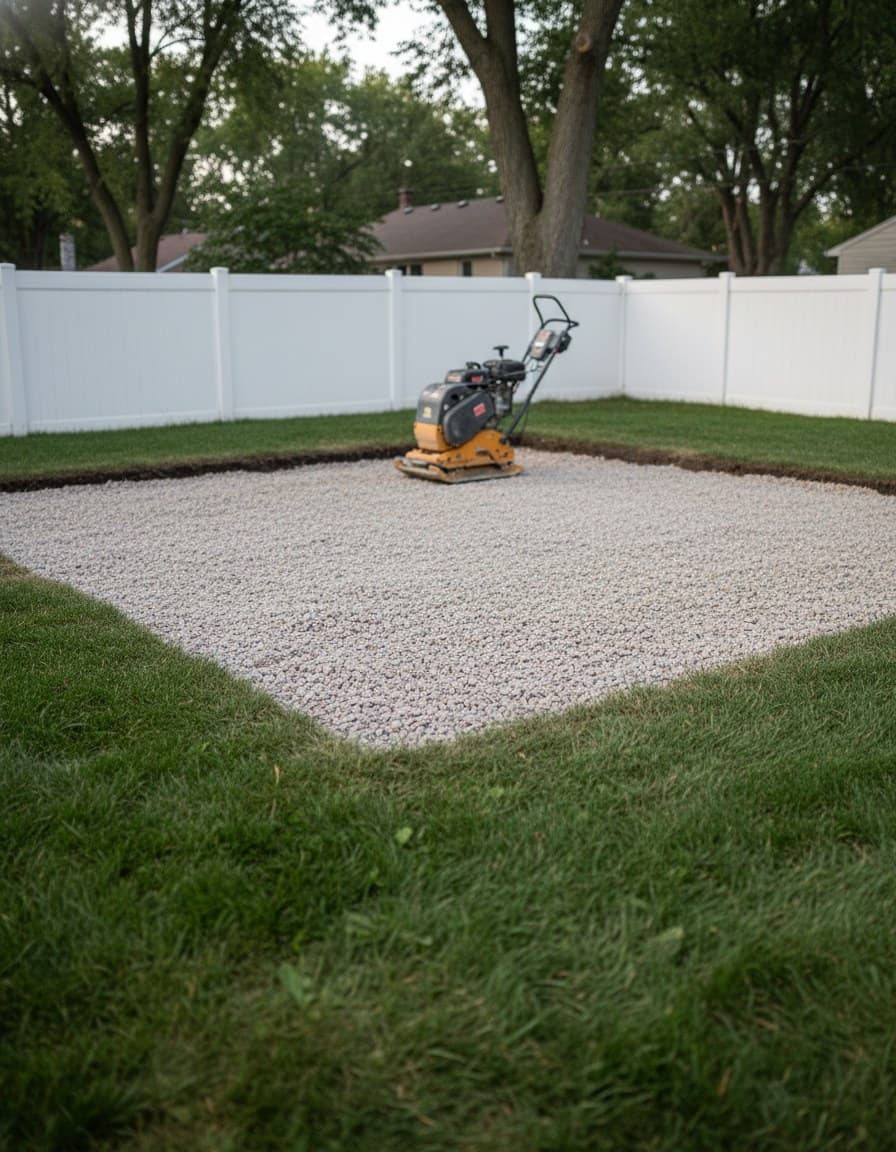
Fresh aggregate base for the replacement patio.
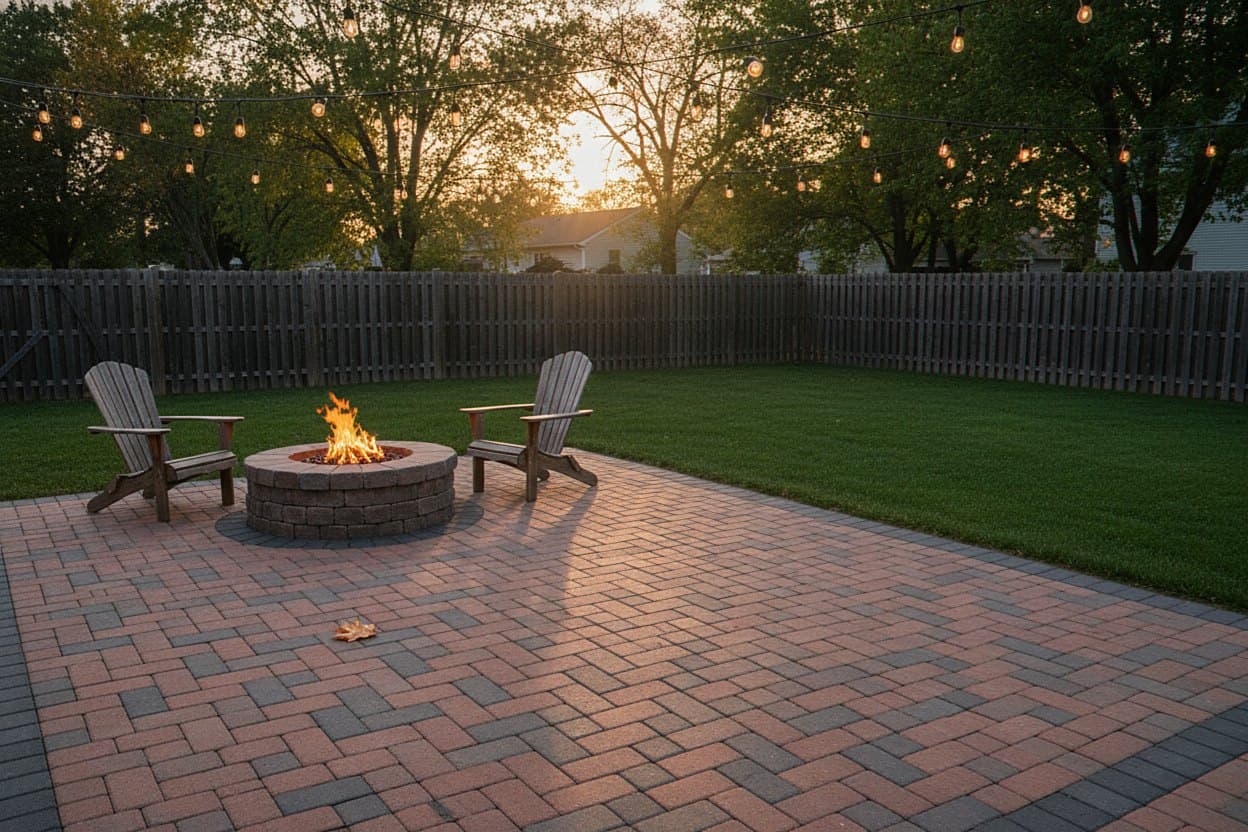
New pavers laid in herringbone over the rebuilt base.
What about the alternatives?

Other options homeowners weigh against a full replacement

When an old patio is failing, three other paths get suggested before a full tear out. The honest version of how each one ages is below.

Resurface stamped concrete with a cement overlay

Cheaper on day one, looks new after the overlay cures. Only works if the substrate slab is structurally sound. Will not save a slab cracked through and tilting.

Acceptable

Lay pavers on top of the existing concrete slab

Promoted as a fast install. Pavers have no place to lock and shift under load. The slab below cracks through the pavers within 2 to 4 winters. Fails inside half a decade.

Skip

Reset the existing brick-on-sand patio in place

Lift the pavers, rake the sand flat, lay them back down. Cheap. Holds 1 to 2 years because the original base is still thin. Sets up the same failure that started this conversation.

Skip

Full tear out and rebuild on a 6 to 8 inch base

The job described above. Removes the failing surface, rebuilds the base, installs new pavers with anchored edges and polymeric sand. New patio lasts 30 years.

Recommended
How it goes

From quote to walk-on, fast.

01

Free walk-through

02

Excavation and base

03

Sand bed and pavers

04

Polymeric sand and seal

Before you book

What to confirm before signing a replacement contract

The questions that catch a thin replacement bid are different from the ones for a fresh install. The list below is what to push on before any work starts.

Is the tear out and haul included in the quote price?
It should be, as a separate line item. A reputable contractor breaks out the demo cost, the disposal cost (per ton or per load), and the base rebuild cost. That lets the homeowner see what is being charged for the rip out work versus the new install work. A single lump number with no breakdown is where shortcuts hide.
How much fresh aggregate is going on the base?
On a typical replacement, the existing base gets stripped and a full 6 to 8 inches of fresh crushed limestone goes in, compacted in 2 to 3 inch lifts. If the existing base was deeper than expected and is still in good condition, the crew may keep some of it and top with 4 inches new. The number gets confirmed during the tear out, not as a guess from the curb.
What paver brand and pattern are you using on the new patio?
A 60mm residential paver from Unilock, Belgard, Techo-Bloc, or Cambridge, in a herringbone, running bond, or basketweave pattern. The brand, model name, color, and pattern belong in the written quote. The homeowner sees physical paver samples during the walk through; the contractor brings a sample board with color options from each brand.
How long is the yard out of service?
Tear out day one. Base rebuild day two and three. Paver install day four through six. The patio is walkable the same evening the polymeric sand is watered in. Light furniture comes back the next day. Heavy items (grill, planters, table) by the end of the install week.
Can I keep any of the old pavers as backup?
Yes, if they are an intact brick-on-sand patio. Reputable contractors will set aside intact original pavers as backup stock for the homeowner to use on future small repairs or as garden edging. Stamped concrete debris is not salvageable and goes to recycling. The homeowner makes the call during the walk through.
Aftercare

Keeping a replacement patio from following the same failure path

A replacement patio is a brand new install, so it gets the same maintenance as a new one. The difference is that the homeowner has watched one patio fail already, which is useful context. If the original failure was washout of joint sand, the new polymeric sand schedule starts immediately. If the original failure was settling because of a wet base, the new base gets drainage and a clear downspout route. The first 2 to 3 years of the new patio are the window where habits matter most. Watching the edge restraints, sweeping fresh poly sand on schedule, and addressing any small heave quickly all do more for the patio than they will in years 10 through 30.

  • Sweep fresh polymeric sand into the joints every 3 to 5 years from the start.
  • Low-pressure rinse in spring once a year; never high pressure that blasts joints out.
  • Check every edge restraint spike before the first winter; re-anchor any that worked loose during install.
  • Re-route any downspout that ever discharged near the patio edge; this is the most common cause of the original failure.
  • Address any small settling within the first season rather than waiting for the corner to drop an inch.
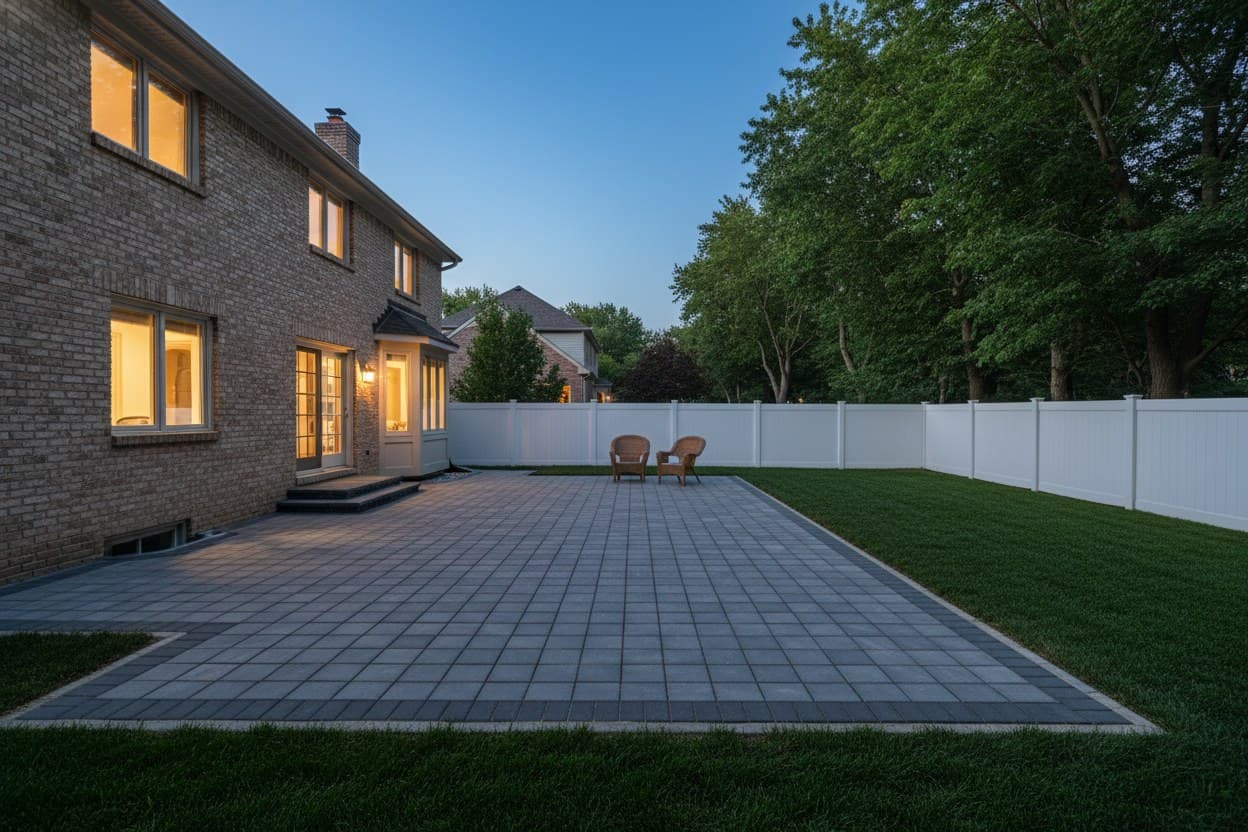
Wide finished replacement patio at dusk.
FAQ

Replacement questions Troy owners ask

How long does a paver patio install take from start to walking on it?
Most residential paver patio installs in Troy run 3 to 5 days from excavation to polymeric sand sweep. Day one is excavation and base. Day two and three are bedding sand and paver laying. Day four is cuts and edge restraints. Day five is polymeric sand and watering it in. The patio is walkable the same evening the poly sand is set. Light furniture comes back the next day. Heavy items (grill, planters, table) by the end of the install week.
What kind of base do you put down for Michigan freeze and thaw?
6 to 8 inches of crushed limestone (21AA or 22A in Michigan), placed in 2 to 3 inch lifts and compacted between each lift with a plate compactor. That depth is what holds the patio flat against heavy clay soil that swells when wet and shrinks when dry, and against the 50 plus freeze and thaw cycles a Michigan patio sees between November and April. Cutting the base depth to 2 or 3 inches is the most common cheap shortcut and shows up as settling inside the first 2 winters.
Should I replace my stamped concrete patio with pavers, or just resurface it?
Depends on the structural condition of the underlying slab. If the stamped concrete is cracked through into multiple pieces, tilting in sections, or showing surface spalling across the field, resurfacing throws good money after bad and a full tear out plus paver install is the honest path. If the slab is still flat, mostly intact, and only the surface color has worn off, a cement overlay or a re-stamp can restore the look for less. The walk through includes an honest read on which path the slab needs.
How often do I need to redo the polymeric sand between the joints?
Every 3 to 5 years on a residential paver patio in Oakland County. Polymeric sand contains a polymer that activates with water and binds the sand into a flexible plug. The polymer wears down under UV exposure and freeze-thaw cycling. After 3 to 5 years, the joints start to lose bind, weeds find gaps, and the surface looks tired. A one-day re-sweep refreshes the field and the patio looks 5 years younger.
Is a wood-burning fire pit safe on top of pavers?
Yes, with a steel insert ring inside the block ring. A built-in paver fire pit needs three layers: a retaining-wall block ring stacked 3 to 4 courses high, a steel insert ring inside that ring to take the direct heat, and a paver brick or steel floor at the bottom to protect the aggregate base from ember contact. A wood fire directly on pavers, with no steel insert and no protective floor, scorches the pavers within a few burns and cracks the aggregate base over time. The built-in version with the insert is the safe long-term answer.
Ready when you are

Ready for a real Troy floor?

Send a few photos or book a free 15-minute on-site walk-through. A fixed written quote within one business day.

Get a free quoteCall (947) 216-2879
CallFree Quote