Paver Walkway and Patio Extension · Troy

Paver Walkway and Patio Extension in Troy, MI

Adding a walkway from the side door to the rear patio, or pushing an existing patio bigger, in the same brand and color as the original.

2 to 3 days installs · typical timeline
Free Quote

Free Paver Walkway and Patio Extension quote.

We reply within 1 business hour. No spam, ever.

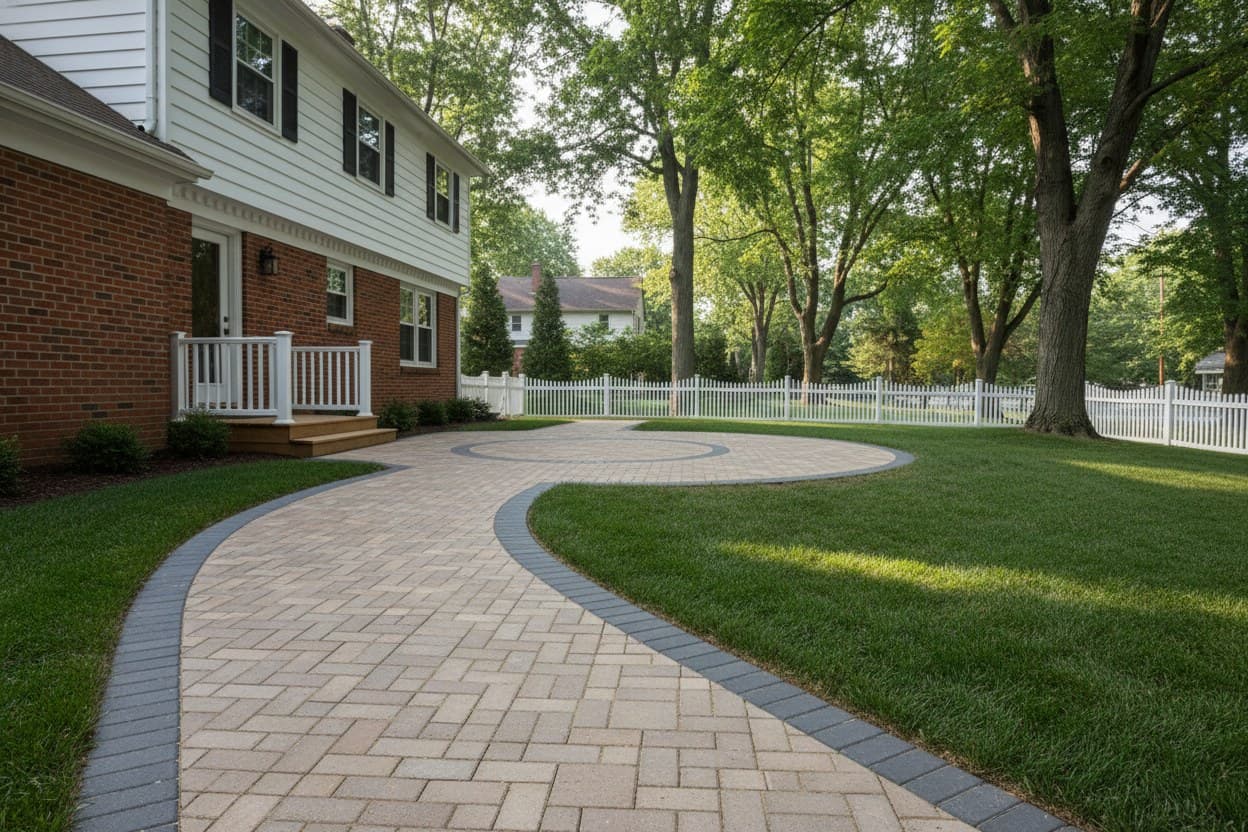
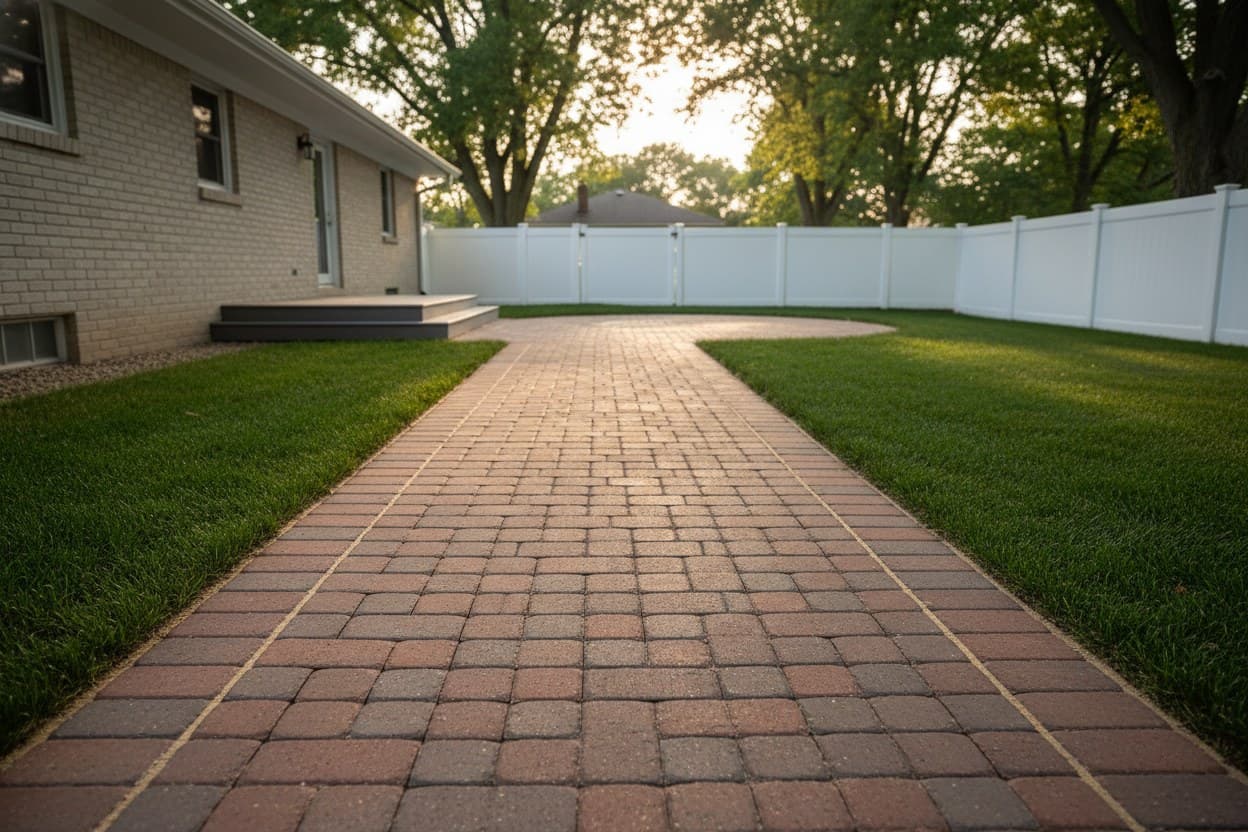
Curved paver walkway from side door to rear patio.
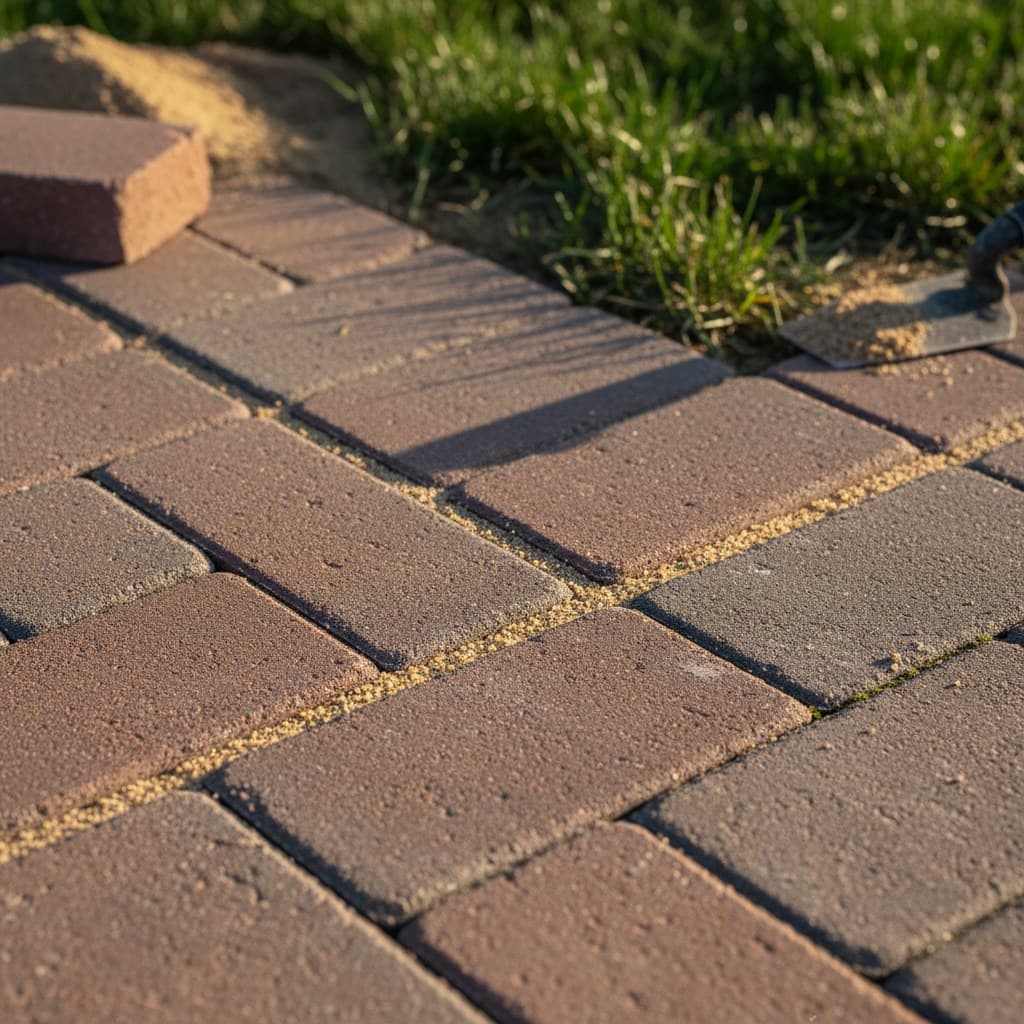
Soldier-course edge transitioning into running-bond walkway.
Pavers cut on wet saw for curve transition.
What we install

When a walkway or an extension is the right call

Most Troy paver projects start as a back patio. After a season or two of use, the homeowner realizes the patio is the right size but the access to it is wrong. Or the patio fits the table and chairs but not the grill and the second couch. Or the walk from the driveway to the back goes across a worn lawn path that needs to become hardscape. Walkways and extensions are the natural follow-on. They are smaller projects than the original patio, finish in 2 to 3 days, and match the existing field if the original paver brand is still in production.

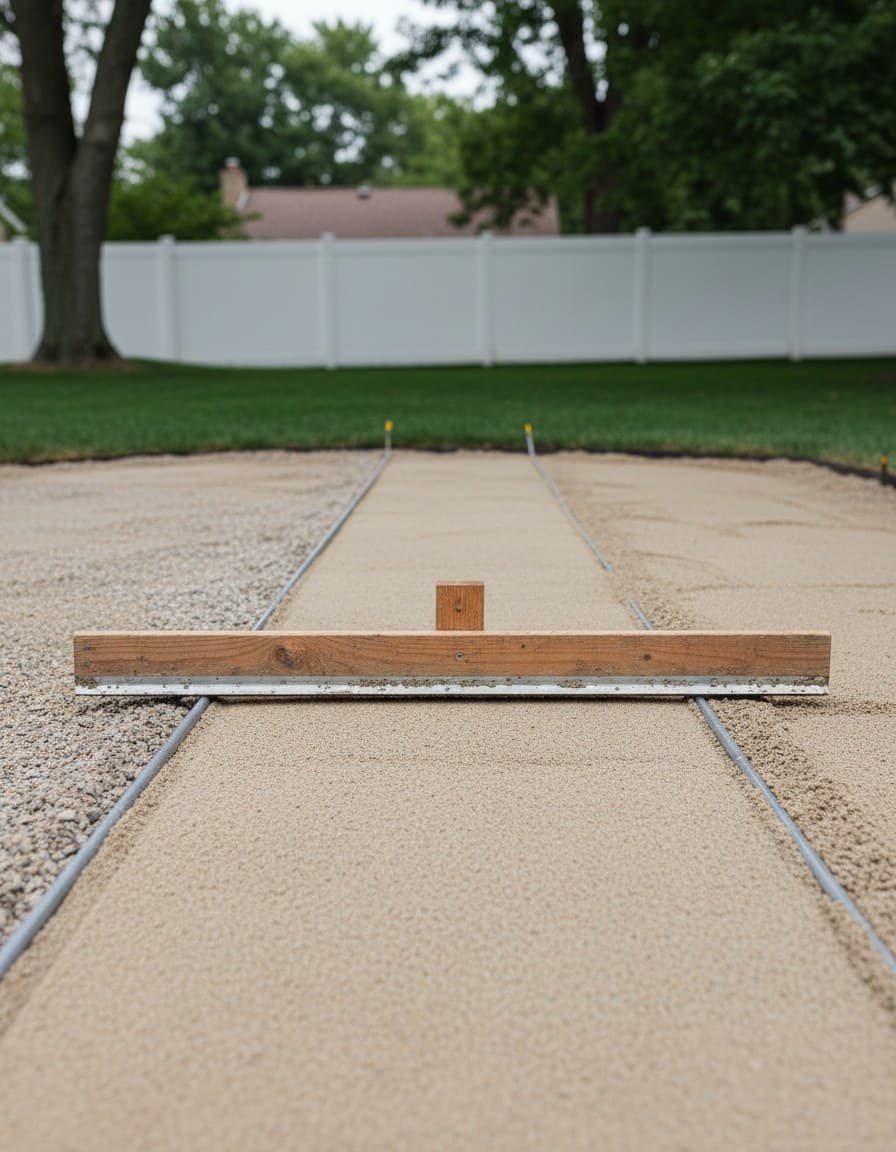
A new walkway is the same five-layer construction as a patio, just narrower. 6 to 8 inches of compacted aggregate base. An inch of screeded bedding sand. 60mm pavers in a running bond or soldier course pattern. Anchored edge restraints. Polymeric sand in the joints. The pattern choice differs from a patio. Running bond looks more like a path. Soldier course (pavers on edge along the perimeter) gives a strong visual frame. Herringbone is overkill for foot-only walkway use and harder to cut at curves. A patio extension uses the same brand and color as the original field. The tie-in line gets placed where it is least visible, usually under a piece of furniture or at a deliberate transition like a fire pit edge. Pavers that are still in production match exactly. Older paver lines that have been discontinued get a closest-color match placed at the joint line.

  • Same 6 to 8 inch aggregate base as a patio, just narrower for a walkway run.
  • Running bond or soldier course pattern for walkway use; matches the patio for extensions.
  • Anchored edge restraints along the full perimeter, especially around any curve.
  • Smooth wet-saw cuts at every curve so the walkway flows visually instead of stepping.
  • Brand match on extensions when the original paver line is still in production.
A paver project rarely ends with the first patio. The walkway and the extension that come later are what turn the patio into the actual outdoor space.

Troy paver projects often grow in stages. A patio in year one, a walkway from the side door in year three, a fire pit in year five. The contractor that handles each stage should keep notes on the brand, model, and color of the original install so future additions match. Most reputable Oakland County paver contractors will pull the original quote on a return visit, confirm the brand is still in production, and order matching material before any work starts. A new contractor on a follow-on project who does not have the original install notes will struggle to match the field exactly.

If the Troy project is a new walkway, a patio extension, or both, send photos of the existing patio and the planned addition through the form. A contractor will book a free walk through that includes confirming the original paver brand, sourcing matching material, and quoting the addition with the tie-in plan written down.
Materials

What changes between a patio install and a walkway install

The base, the bedding sand, and the joint sand are identical between a patio and a walkway. The pattern, the cuts, and the edge restraint planning are different. A walkway sees foot-only traffic. The pattern choice is about look rather than load. Running bond (the most common path pattern) or a soldier-course-framed running bond field both work. Herringbone is the strongest pattern for vehicle traffic. It is overkill on a 4 foot wide walkway and creates cut waste at the perimeter. The edge restraint planning matters more on a walkway than on a patio. The smaller field has a higher edge-to-area ratio. Every curve needs anchored restraint to keep the pavers from drifting sideways under foot traffic and freeze-thaw cycles.

Patio extensions add a complication that fresh installs do not have: matching the existing field. The contractor confirms the original paver brand, color, and pattern during the walk through. Brands that are still in production deliver an exact match. Discontinued lines require a closest-color sourcing through the manufacturer or a third-party paver matcher. The tie-in line between the original field and the new extension gets placed strategically. The cleanest option is to extend a straight edge of the original patio outward without changing the pattern, so the joint line where old meets new is hidden in the regular pattern grid. The second option is a deliberate visual transition. A soldier-course band, a change in pattern, or a fire pit ring centered on the joint line. The tie-in then reads as design intent rather than a seam.

  • Running bond or soldier-course-framed pattern for walkways; herringbone is overkill.
  • Anchored edge restraints especially around every curve; a walkway is more edge than field.
  • Patio extensions confirm brand and color during the walk through before any work starts.
  • Tie-in line placement: hide in the existing pattern, or make it intentional with a band.
Patio extension tying into existing field, matching brand.
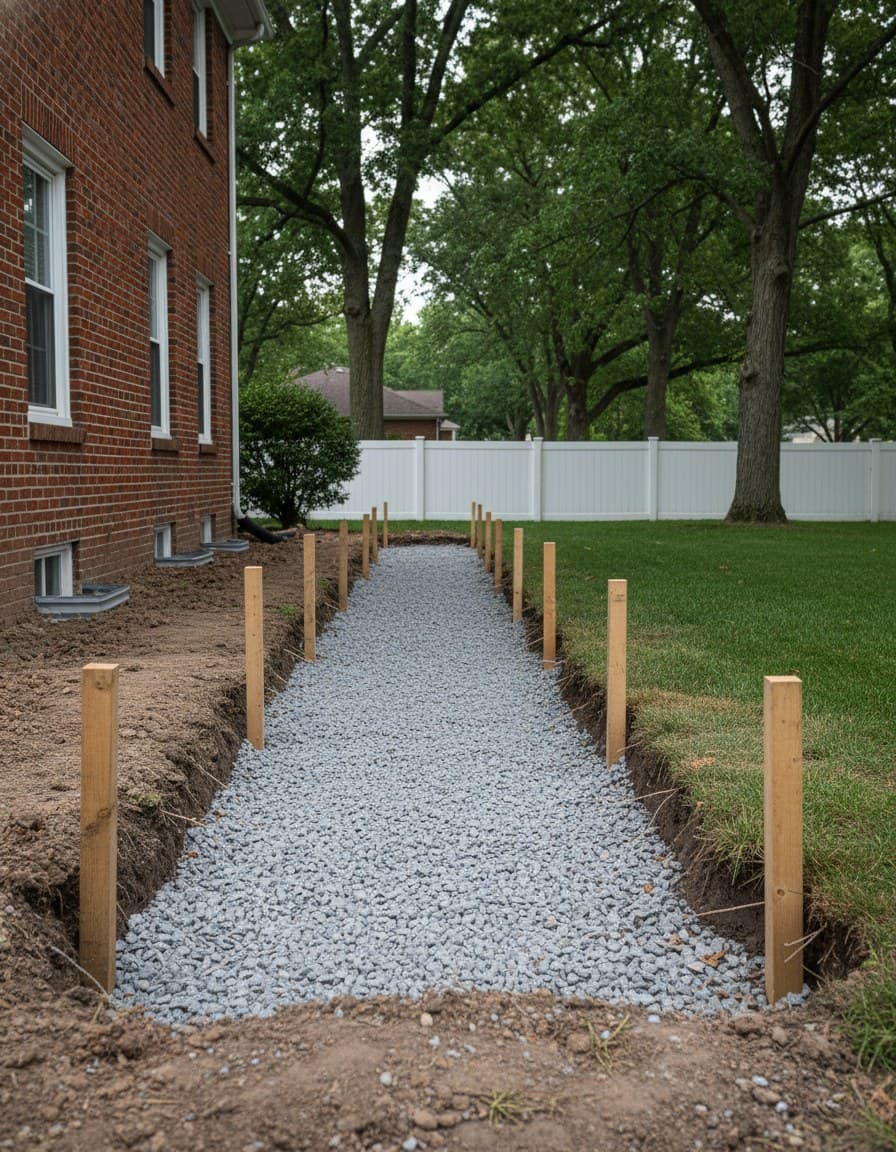
Aggregate base for the walkway, plate compactor mid-pass.
What about the alternatives?

Walkway and extension options compared

Homeowners get pitched a few different approaches to walkways and extensions. The honest version of how each one ages is below.

Stepping stones in the lawn

Cheapest. Looks fine for a season. Lawn grows around and over them, stones rock, mowing is awkward. Acceptable for a low-use garden path, not a real walk to the back patio.

Skip

Loose gravel walkway

Cheap and quick. Gravel scatters into the lawn, weeds grow through, snow removal scrapes the gravel out. Hard to keep clean on a residential lot.

Skip

Poured concrete walkway

Permanent surface, lower install cost than pavers. Cracks at random across heavy clay soil unless poured to driveway spec. Hard to repair invisibly when a section sinks.

Acceptable

Paver walkway matched to the existing patio

Same construction as the patio, narrower. Matches the existing field for visual continuity. Lifts and re-lays cleanly if a section ever settles. Lasts 30 years.

Recommended

Patio extension in the same paver brand

Pushes the existing field outward by 50 to 100 percent. Brand and color match if still in production. Tie-in line hidden in the pattern grid or made intentional with a band.

Recommended
How it goes

From quote to walk-on, fast.

01

Free walk-through

02

Excavation and base

03

Sand bed and pavers

04

Polymeric sand and seal

Before you book

Things to confirm before booking a walkway or extension

Walkway and extension projects look small but the matching requirements are real. The questions below catch the bids that will deliver a mismatched or settling addition.

Will the new pavers match my existing patio?
If the original paver brand and color are still in production, yes, the match is exact. The contractor confirms the brand during the walk through and orders from the same line. If the original brand has been discontinued, the contractor sources the closest available match and places the tie-in line strategically so any slight color difference is least visible. The walk through includes seeing the matched paver next to an original paver in natural light to confirm the match is acceptable.
Where does the tie-in line go between old and new?
The cleanest option is to extend a straight edge of the original patio outward without changing the pattern. The joint where old meets new is then just a regular joint line in the pattern grid and is invisible. The second option is a deliberate visual band at the transition. A row of soldier-course pavers, a change in pattern, or a fire pit ring. The tie-in then reads as design intent. Both options get drawn on a sketch during the walk through and confirmed before any work starts.
What base depth are you using for the walkway?
Same 6 to 8 inch compacted aggregate base as a patio. A walkway sees lower point loads than a patio but is just as susceptible to clay heave and frost lift. Cutting the base depth to save cost is the most common cheap shortcut and shows up as settling within 2 winters. The base spec belongs in the written quote.
How are curves handled at the cut edges?
Pavers cut on a wet saw to follow the curve, with the cut edge facing outward to the lawn so the unfinished edge is hidden against the edge restraint. A clean curve has cuts every 6 to 12 inches around the perimeter. Skipping the cuts and laying full pavers with gaps at the curve is a common shortcut on cheap bids; the gaps fill with weeds within a season.
Can the walkway connect to a future fire pit or extension?
Yes, and that is the right way to plan it. If a fire pit, an outdoor kitchen, or a second patio area is on the future list, the walkway should aim at where those future projects will sit. Most reputable contractors will note the future expansion plan on the walk through quote and orient the walkway so the future tie-in is clean.
Aftercare

Keeping a walkway and extension flat for the long run

Walkways and extensions get the same maintenance as the patio they connect to. Fresh polymeric sand every 3 to 5 years. Low-pressure rinse in spring. Watch the edges, especially around curves, for any restraint spike that has worked loose. Walkways see more salt and shovel traffic than patios because they are the path the homeowner uses every day, so the wear on joint sand is faster. Plan on the walkway needing a poly sand refresh slightly more often than the patio it connects to. Extensions wear at the same rate as the original patio and tie into the same maintenance schedule.

  • Fresh polymeric sand in the joints every 3 to 5 years across both walkway and patio.
  • Low-pressure rinse with a surface cleaner once a year in spring.
  • Re-anchor any edge restraint spike that works loose, especially around curves.
  • Push snow with a poly-edged shovel, never a metal edge that catches on the joint lines.
  • Address any small settling immediately rather than letting a corner drop an inch.
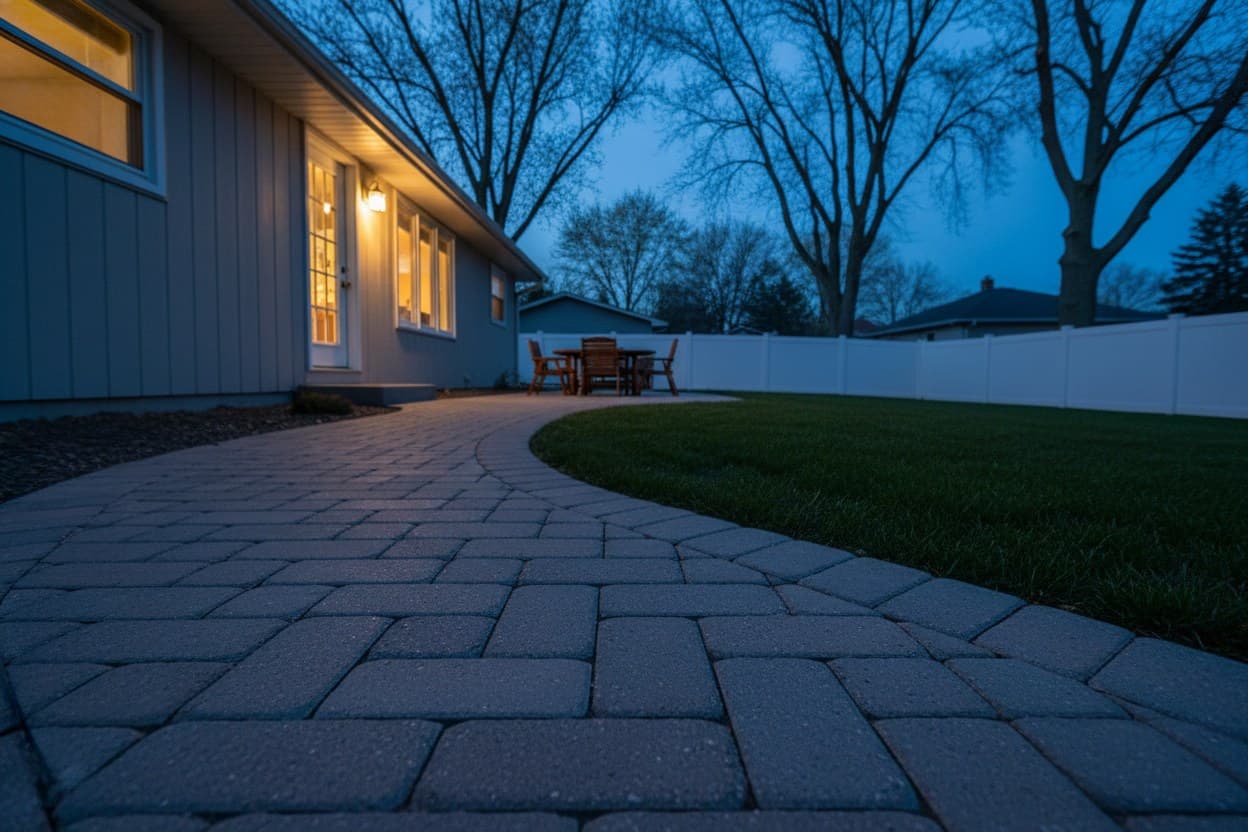
Wide finished walkway with rear patio in background.
FAQ

Walkway and extension questions

How long does a paver patio install take from start to walking on it?
Most residential paver patio installs in Troy run 3 to 5 days from excavation to polymeric sand sweep. Day one is excavation and base. Day two and three are bedding sand and paver laying. Day four is cuts and edge restraints. Day five is polymeric sand and watering it in. The patio is walkable the same evening the poly sand is set. Light furniture comes back the next day. Heavy items (grill, planters, table) by the end of the install week.
What kind of base do you put down for Michigan freeze and thaw?
6 to 8 inches of crushed limestone (21AA or 22A in Michigan), placed in 2 to 3 inch lifts and compacted between each lift with a plate compactor. That depth is what holds the patio flat against heavy clay soil that swells when wet and shrinks when dry, and against the 50 plus freeze and thaw cycles a Michigan patio sees between November and April. Cutting the base depth to 2 or 3 inches is the most common cheap shortcut and shows up as settling inside the first 2 winters.
Should I replace my stamped concrete patio with pavers, or just resurface it?
Depends on the structural condition of the underlying slab. If the stamped concrete is cracked through into multiple pieces, tilting in sections, or showing surface spalling across the field, resurfacing throws good money after bad and a full tear out plus paver install is the honest path. If the slab is still flat, mostly intact, and only the surface color has worn off, a cement overlay or a re-stamp can restore the look for less. The walk through includes an honest read on which path the slab needs.
How often do I need to redo the polymeric sand between the joints?
Every 3 to 5 years on a residential paver patio in Oakland County. Polymeric sand contains a polymer that activates with water and binds the sand into a flexible plug. The polymer wears down under UV exposure and freeze-thaw cycling. After 3 to 5 years, the joints start to lose bind, weeds find gaps, and the surface looks tired. A one-day re-sweep refreshes the field and the patio looks 5 years younger.
Is a wood-burning fire pit safe on top of pavers?
Yes, with a steel insert ring inside the block ring. A built-in paver fire pit needs three layers: a retaining-wall block ring stacked 3 to 4 courses high, a steel insert ring inside that ring to take the direct heat, and a paver brick or steel floor at the bottom to protect the aggregate base from ember contact. A wood fire directly on pavers, with no steel insert and no protective floor, scorches the pavers within a few burns and cracks the aggregate base over time. The built-in version with the insert is the safe long-term answer.
Ready when you are

Ready for a real Troy floor?

Send a few photos or book a free 15-minute on-site walk-through. A fixed written quote within one business day.

Get a free quoteCall (947) 216-2879
CallFree Quote