Brick Patio Repair and Re-leveling · Troy

Brick Patio Repair and Re-leveling in Troy, MI

When a patio is mostly sound but a corner has settled, a section has heaved, or the joint sand is gone, what targeted repair looks like.

1 to 2 days installs · typical timeline
Free Quote

Free Brick Patio Repair and Re-leveling quote.

We reply within 1 business hour. No spam, ever.

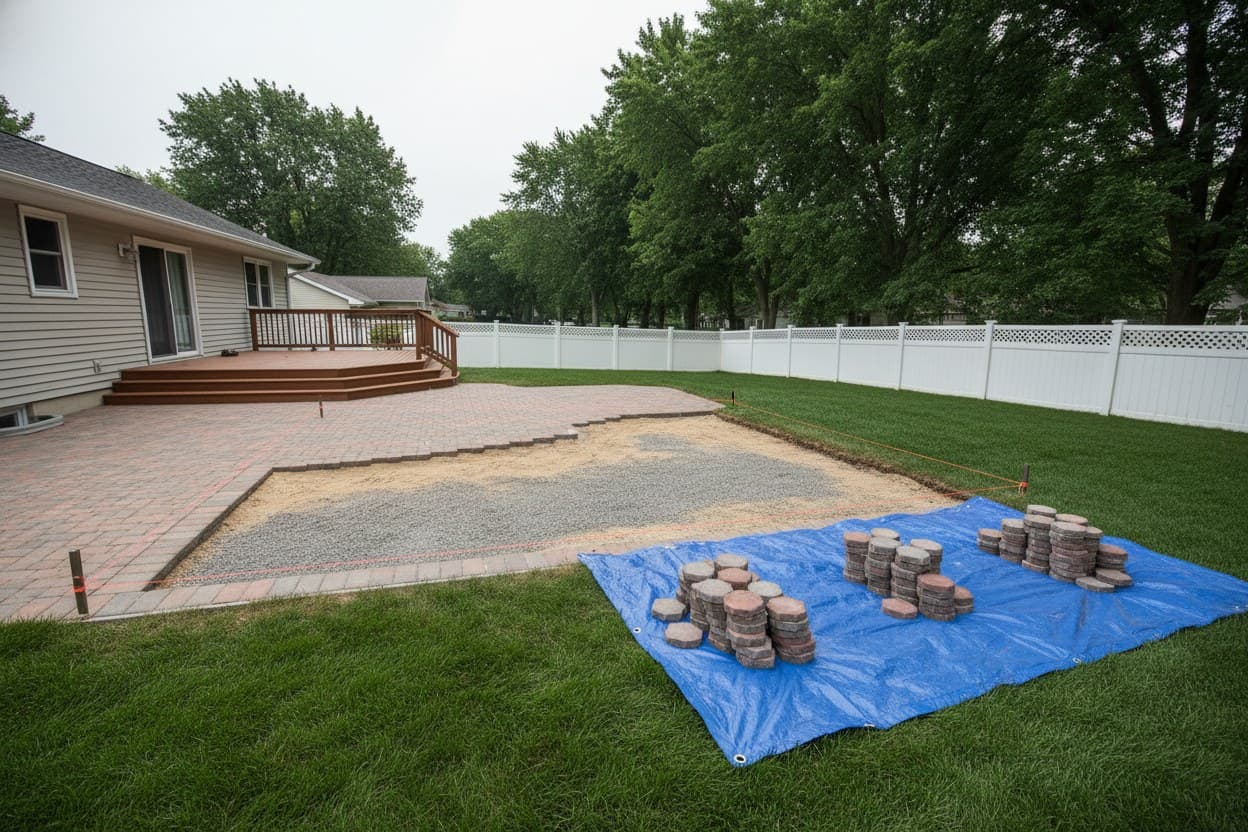
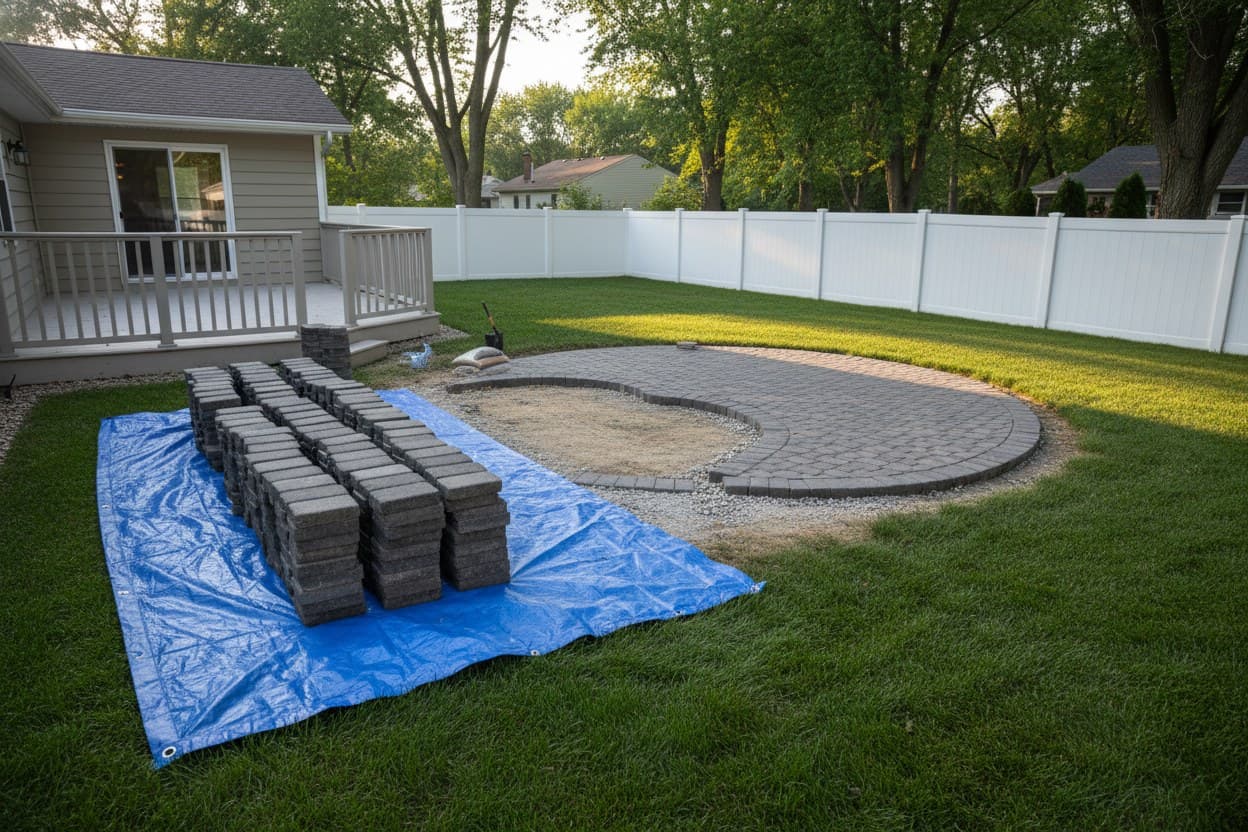
Pulled-up paver section stacked on a tarp.
Settled paver corner near a downspout, dipped below grade.
Pavers lifted, exposed bedding sand visible.
What we install

When a patio is worth fixing, not replacing

Not every settled paver patio needs to be torn out. A patio that is mostly flat, with a settled corner, one heaved section, or open joints washed clean of sand, is a candidate for targeted repair. The honest threshold is straightforward. If 80 percent of the patio is still flat and intact, the bad section can be pulled, the base topped up, and the pavers re-laid in a day or two. If the entire patio has settled, the pavers are cracked across the field, or the base never had enough aggregate in the first place, a partial repair fails inside a year. A full replacement is the honest path.

Targeted repair runs in three common forms. Settled sections get pulled, the base gets topped up with fresh aggregate and recompacted, and the pavers go back in. The crew matches the bedding sand depth to the surrounding field so the repaired area sits flush. Heaved sections get the same treatment with one extra step. The cause of the heave gets addressed first. Common heave causes include tree roots, frost lift, or a leaking downspout that ran under the patio. A root barrier goes in, a downspout extension routes water away, or a clay subgrade gets dug deeper. Joint sand that has washed out gets pressure-rinsed clean, then fresh polymeric sand gets swept in and watered to bind. The patio is walkable the same day on every variation.

  • Targeted lift and re-lay on a sound patio, not a full tear out where the patio does not need it.
  • Base top-up with fresh crushed limestone where the section has settled, compacted in lifts.
  • Root barriers and downspout extensions installed when the cause is identified during the pull.
  • Fresh polymeric sand swept into every joint of the repaired section to re-bind the field.
  • Most repairs finish in 1 to 2 days with the patio walkable the same evening.
Repair works when most of the patio is sound and only a few sections need attention. Repair fails when the base was thin everywhere from day one.

The walk through includes an honest assessment of whether the patio is a repair candidate at all. If the crew sees enough settling, cracking, or base failure that a repair will fail inside a year, the right call is to say so and quote a replacement instead. A repair quote that ignores a failing base to land a small sale is the kind of bid to walk away from. Reputable Troy contractors will tell a homeowner when their patio is past saving rather than upselling repair work that will not last.

If a Troy paver patio has a settled corner, a heaved section, or joints that have washed clean, send photos through the form and a contractor will book a free walk through. The quote covers exactly the repair scope, with the price written before any work starts.
Materials

What goes into a repair that holds versus one that settles again next year

The difference between a real repair and a cosmetic one is what gets done to the base under the bad section. A real repair lifts the pavers, removes the old bedding sand, and tops up the aggregate base in 2 to 3 inch lifts compacted between each lift. The same plate compactor that does new installs gets walked across the repaired section until the aggregate locks. New bedding sand goes down, screeded flat to the surrounding field elevation. Pavers go back in, often the originals if they are not cracked, with fresh polymeric sand in every joint. A cosmetic repair just lifts the pavers and shoves more sand under them. The sand compacts again the first winter and the patio settles right back to where it was.

When the cause of the settling is identifiable, fixing the cause is part of the repair. A downspout that has been spilling water against the patio edge for years gets an extension routed away. A tree root that has lifted a corner gets a vertical root barrier installed at the patio edge. A clay subgrade that has held water gets dug deeper and a drainage layer added. Without that step, the same forces that settled the patio the first time will settle it again. Honest contractors include the cause-fix in the quote rather than just charging for the lift-and-relay.

  • Lift the bad section, do not just shove sand underneath.
  • Top up the base in 2 to 3 inch lifts compacted between each lift.
  • Address the cause (downspout, tree root, clay) when it can be identified.
  • Fresh polymeric sand in every joint of the repaired field, never reuse the old.
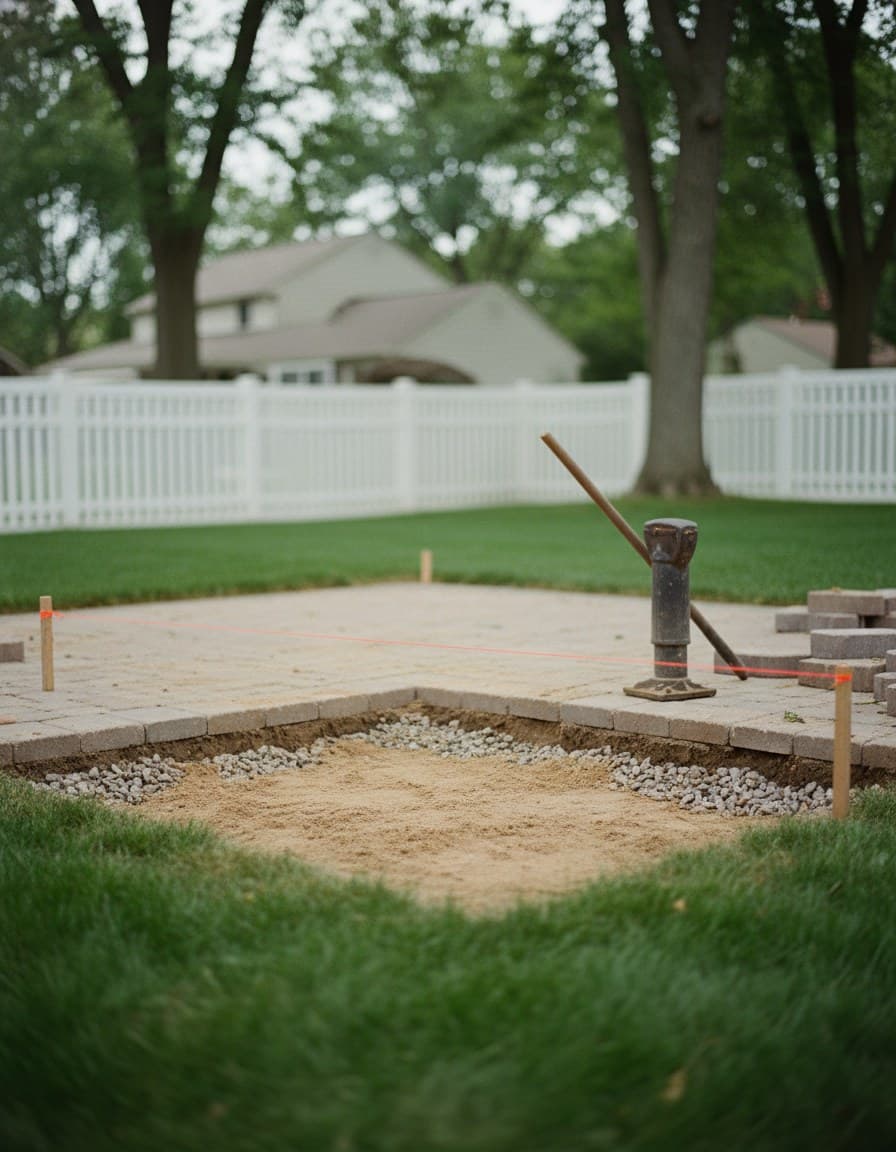
Fresh aggregate topped up under the lifted section.
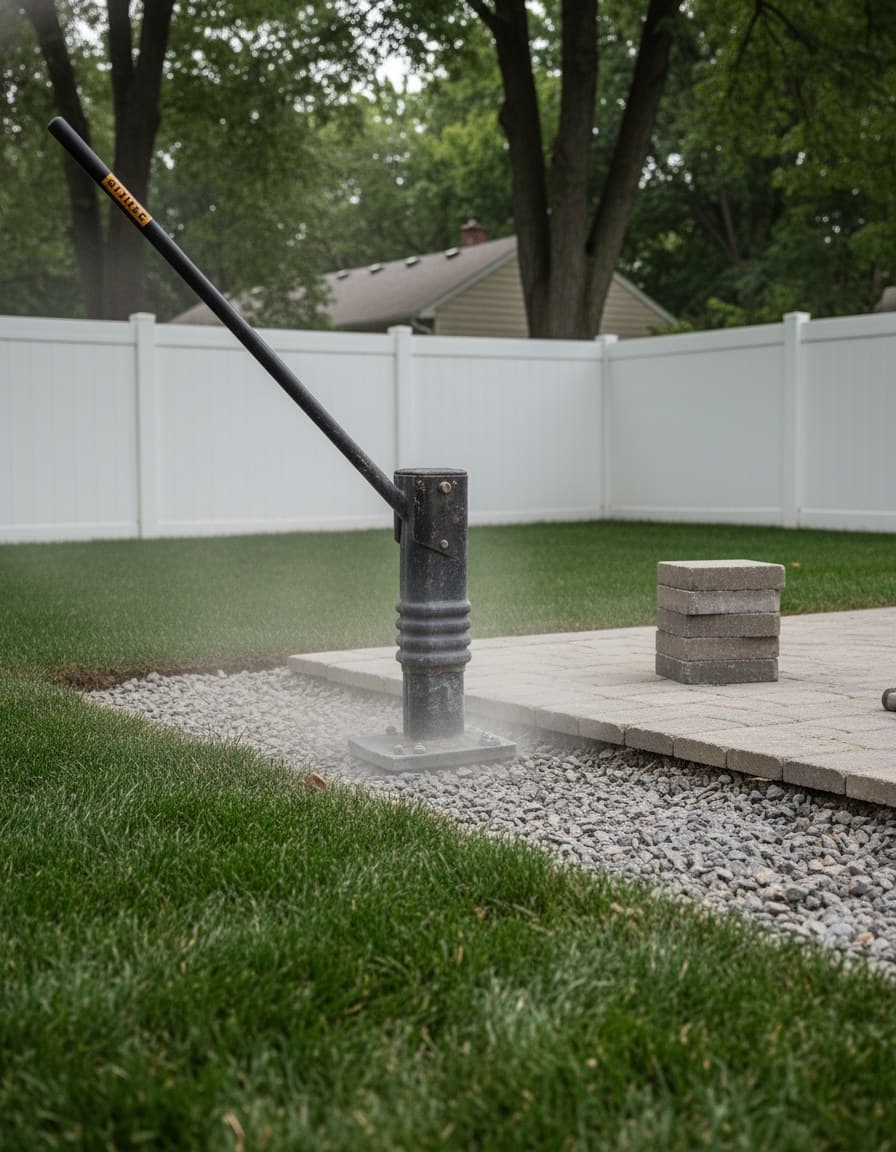
Pavers being re-laid into the repaired section.
What about the alternatives?

Repair options compared, by what they actually fix

When a patio has a problem that is not yet full replacement territory, homeowners get pitched a few different repair options. The honest version of how each one ages is below.

Shove more sand under the settled pavers

Cheapest cosmetic fix. The sand compacts again the first winter. Patio settles right back inside one year.

Skip

Inject expanding foam under the patio

Works for slab-style concrete patios. Does not work for paver patios because individual pavers move independently. Wrong product for this material.

Skip

Lift, top up base, recompact, re-lay (no cause fix)

Better than shoving sand under. Holds 2 to 3 years if the cause of the original settling is not addressed. The same downspout or root will settle it again.

Acceptable

Lift, base top-up, address the cause, re-lay, fresh poly sand

The honest repair. Lifts the field, fixes the base, addresses the downspout or root, and re-lays cleanly. Holds for the remaining life of the patio.

Recommended

Full patio replacement

Honest path when the base was thin everywhere and the settling is field-wide. More cost up front, no further repair calls for the next 30 years.

Recommended
How it goes

From quote to walk-on, fast.

01

Free walk-through

02

Excavation and base

03

Sand bed and pavers

04

Polymeric sand and seal

Before you book

What to confirm before booking a repair job

The questions below catch the repair bids that will fail the same way the original problem did, and identify the patios that need a replacement instead.

Will you tell me honestly if my patio is past repair?
A reputable contractor will, and will quote a replacement instead. The honest call comes from looking at how much of the patio has settled, whether the pavers are cracked, and what the base depth was originally. A patio with one settled corner and 80 percent flat field is a repair. A patio that has settled field-wide because the base was 2 inches instead of 6 is a replacement. A contractor quoting partial repair on that is selling work that will not last.
What is causing my corner to settle?
Three causes are most common. A downspout that spills against the patio edge and washes the base out over years. A tree root that has lifted the subgrade from below. A thin original base that has compacted over time. The contractor identifies the cause during the lift by looking at what is under the pavers. Knowing the cause lets the repair address it rather than just resetting the pavers to settle again.
How much new base material is going in?
On a typical settled-corner repair, 2 to 4 inches of fresh crushed limestone topped onto the existing base, compacted in lifts. If the existing base is thinner than 4 inches across the bad section, the crew may strip more out and put in 6 inches new. The number gets confirmed during the lift, not as a guess from the curb.
Will the repaired section match the rest of the patio?
If the original pavers are intact, the crew re-uses them in the repaired section so the color and texture match exactly. If some pavers cracked in the heave or got broken during the lift, the contractor sources replacement pavers from the original brand and color line. Older paver lines sometimes go out of production. In that case the closest match is used. The slight color variation gets placed at the patio edge where it is least visible.
How long is the patio out of service?
Most settled-corner repairs run 1 to 2 days. Lift on day one, base and re-lay on day one or two. The patio is walkable the same evening once the poly sand is watered in. Light furniture can come back the next day. The bad section is the only part out of service; the rest of the patio stays in use throughout.
Aftercare

Keeping a repaired patio from needing the next repair right away

After a repair, the patio gets the same maintenance as a healthy one. Sweep fresh polymeric sand into the joints every 3 to 5 years. Watch the repaired section for any new movement in the first year. If the cause of the original settling was addressed correctly (downspout extension, root barrier, base top-up), the repair holds for the remaining life of the patio. If the patio starts to settle in a new place within a year of the repair, the original cause was deeper than the lift addressed. The contractor should come back for another look rather than just chasing each new sag as it appears.

  • Sweep fresh polymeric sand into the joints every 3 to 5 years across the whole patio.
  • Watch the repaired section closely for the first year for any new settling.
  • Re-route any downspout that still spills near the patio edge, even if the original cause was a different one.
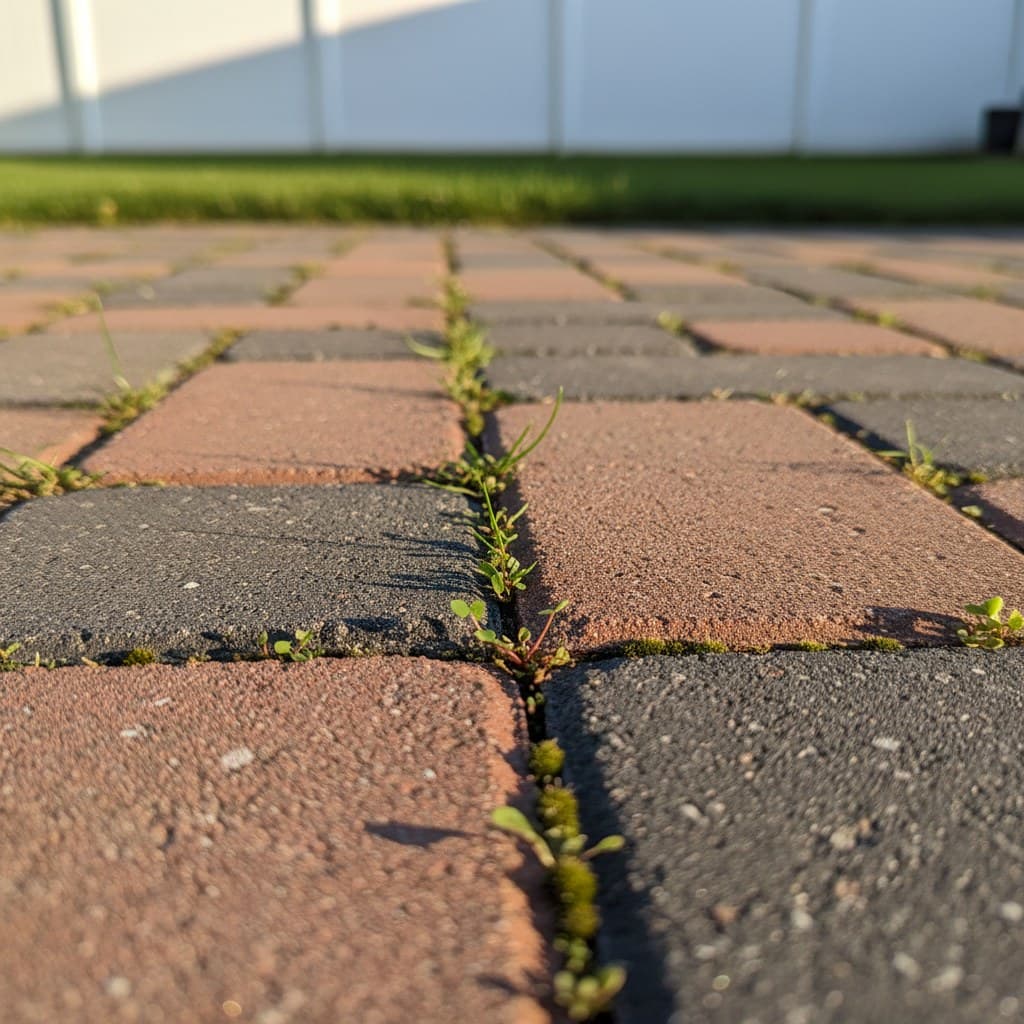
  • Pull weeds at any joint gap immediately and re-sweep poly sand into that joint.
  • If new settling appears within a year, call the contractor back rather than ignoring it.
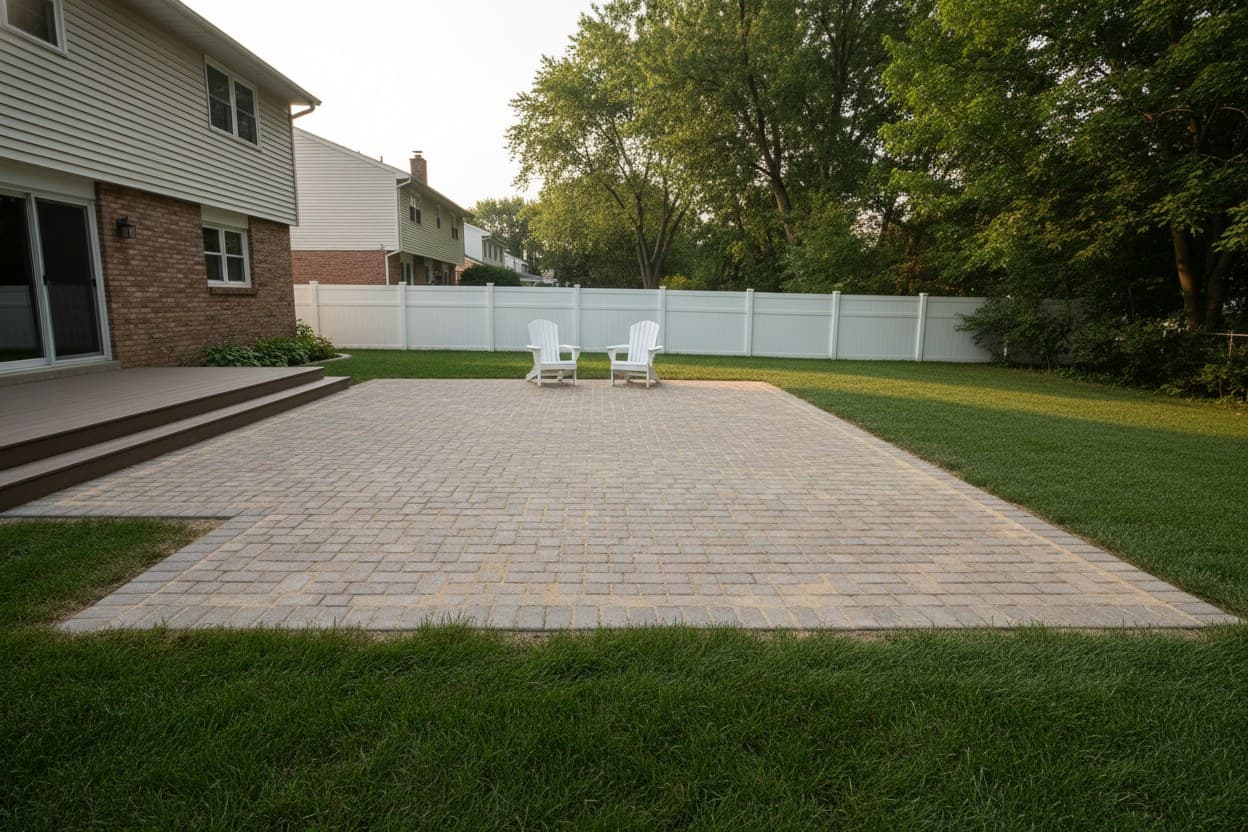
Repaired patio section flush with surrounding field.
FAQ

Repair questions homeowners ask

How long does a paver patio install take from start to walking on it?
Most residential paver patio installs in Troy run 3 to 5 days from excavation to polymeric sand sweep. Day one is excavation and base. Day two and three are bedding sand and paver laying. Day four is cuts and edge restraints. Day five is polymeric sand and watering it in. The patio is walkable the same evening the poly sand is set. Light furniture comes back the next day. Heavy items (grill, planters, table) by the end of the install week.
What kind of base do you put down for Michigan freeze and thaw?
6 to 8 inches of crushed limestone (21AA or 22A in Michigan), placed in 2 to 3 inch lifts and compacted between each lift with a plate compactor. That depth is what holds the patio flat against heavy clay soil that swells when wet and shrinks when dry, and against the 50 plus freeze and thaw cycles a Michigan patio sees between November and April. Cutting the base depth to 2 or 3 inches is the most common cheap shortcut and shows up as settling inside the first 2 winters.
Should I replace my stamped concrete patio with pavers, or just resurface it?
Depends on the structural condition of the underlying slab. If the stamped concrete is cracked through into multiple pieces, tilting in sections, or showing surface spalling across the field, resurfacing throws good money after bad and a full tear out plus paver install is the honest path. If the slab is still flat, mostly intact, and only the surface color has worn off, a cement overlay or a re-stamp can restore the look for less. The walk through includes an honest read on which path the slab needs.
How often do I need to redo the polymeric sand between the joints?
Every 3 to 5 years on a residential paver patio in Oakland County. Polymeric sand contains a polymer that activates with water and binds the sand into a flexible plug. The polymer wears down under UV exposure and freeze-thaw cycling. After 3 to 5 years, the joints start to lose bind, weeds find gaps, and the surface looks tired. A one-day re-sweep refreshes the field and the patio looks 5 years younger.
Is a wood-burning fire pit safe on top of pavers?
Yes, with a steel insert ring inside the block ring. A built-in paver fire pit needs three layers: a retaining-wall block ring stacked 3 to 4 courses high, a steel insert ring inside that ring to take the direct heat, and a paver brick or steel floor at the bottom to protect the aggregate base from ember contact. A wood fire directly on pavers, with no steel insert and no protective floor, scorches the pavers within a few burns and cracks the aggregate base over time. The built-in version with the insert is the safe long-term answer.
Ready when you are

Ready for a real Troy floor?

Send a few photos or book a free 15-minute on-site walk-through. A fixed written quote within one business day.

Get a free quoteCall (947) 216-2879
CallFree Quote