Fire Pit with Paver Patio · Troy

Fire Pit with Paver Patio in Troy, MI

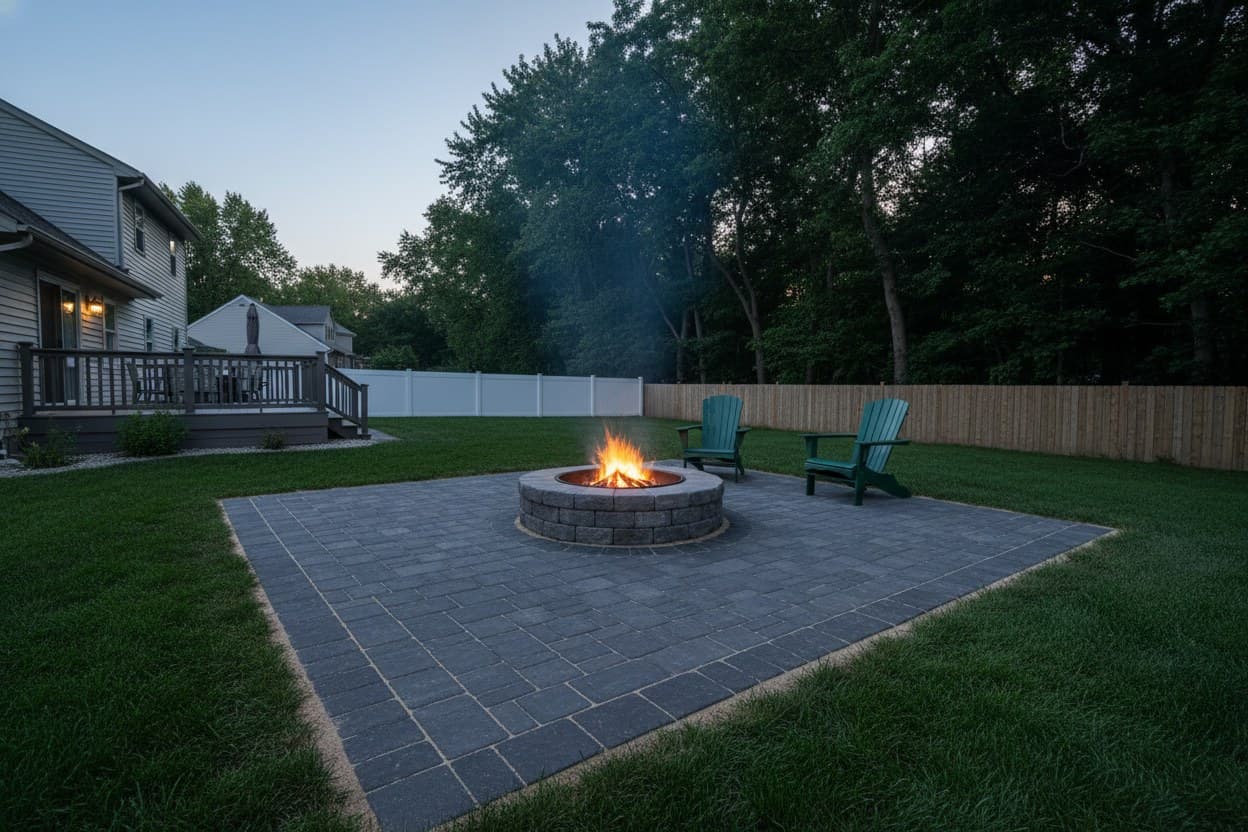
A built-in paver fire pit set into a matching patio field, with a steel insert ring for safety and a bullnose cap for the sit-on edge.

3 to 5 days combined installs · typical timeline
Free Quote

Free Fire Pit with Paver Patio quote.

We reply within 1 business hour. No spam, ever.

Circular paver fire pit at dusk with ember glow.
Retaining-wall block ring for fire pit, pre-assembly.
Steel insert ring lowered into the block ring.
What we install

What a real paver fire pit looks like

A fire pit and paver patio together is the most common combination in Troy paver projects. Five out of five competitors in the local market sell them as a single package because the install efficiencies are real. The same crew already on site for the patio install can knock out the fire pit ring in a day. The materials overlap. The aesthetic ties together. A separate fire pit project six months after a finished patio costs more in mobilization and rarely matches the patio brand and color quite right. The right move is to design both at the walk through and build them in one window.

A built-in paver fire pit is a four-foot diameter ring of retaining-wall block, three to four courses tall, with a steel fire pit insert dropped inside for safety and a bullnose wall cap mortared along the top course for the sit-on edge. The patio field is laid around the ring with cuts that follow the curve cleanly. The base under the fire pit is the same 6 to 8 inch compacted aggregate as the rest of the patio, with a fire-rated brick or a steel floor inside the insert ring to protect the aggregate from direct heat. The fire pit cap should sit at sit-down height, around 18 inches off the patio surface, so guests can perch on the edge. Wood-burning is the most common fuel; gas inserts are available for homeowners who want a button start and a clean burn.

  • 4-foot diameter ring of retaining-wall block, sized for an 18 to 24 inch wood fire.
  • Steel fire pit insert ring inside the block to contain the heat and protect the pavers.
  • Bullnose wall cap at sit-down height (18 inches) along the top course of the ring.
  • Patio field cut cleanly around the ring with no awkward narrow slivers at the curve.
  • Built in the same window as the patio, by the same crew, with the same materials.
The fire pit is the part of the patio that gets used most. A patio with a built-in pit sees evenings and dinners; a patio without one sees daytime use only.

Troy and the rest of Oakland County allow open wood fires in backyard fire pits subject to local nuisance ordinances. Smoke and embers are the practical limits. A 4-foot diameter pit handles an 18 to 24 inch wood fire safely; anything bigger pushes the heat envelope into nearby seating and trees. The walk through includes siting the pit at least 10 feet from the house, deck, and any overhanging branches. Gas inserts (natural gas with a buried line or propane with a swappable tank) remove the smoke and ember problem and turn the pit on with a switch. The trade-off is a less primal fire experience and a higher install cost.

If a Troy paver patio plan includes a fire pit, send photos of the backyard and the planned location through the form. A contractor will book a free walk through that includes siting the pit at the right distance from the house, picking a steel insert size, and choosing block and cap colors that match the patio brand.

Materials

What the fire pit is built from, layer by layer

The fire pit ring is built from retaining-wall block, sometimes called wall stone or pit block. These are 3 to 4 inch thick concrete blocks designed to stack with a lip on the back that keeps each course locked to the one below. Three to four courses high gets the fire pit to sit-down height (18 inches) above the patio surface. The block manufacturer matters. Unilock, Belgard, Techo-Bloc, and Cambridge all make wall block in the same color families as their pavers, so the pit ties visually to the patio field. The block face inside the ring sees direct fire heat and slowly bakes; the steel insert ring inside the block ring is what takes the actual heat and protects the block from thermal cracking.

The steel insert ring is a 36 inch interior diameter, 12 to 16 inch tall, half-inch wall steel cylinder, sometimes with a stainless mesh floor and a clean-out tab. It sits inside the block ring with about an inch of air gap around it for ventilation. The bullnose wall cap mortars onto the top course of the block with a thin bed of flexible adhesive or polymer-modified mortar; loose caps on a fire pit ring are a safety problem because guests sit on them. The base under the pit is the same compacted aggregate as the surrounding patio, with a paver brick or steel floor laid inside the insert ring to protect the aggregate from direct ember contact.

  • Retaining-wall block, 3 to 4 courses high, matched to the patio brand and color.
  • Steel insert ring inside the block, 36 inch interior diameter, half-inch wall.
  • Bullnose wall cap mortared at the top course at sit-down height (18 inches).
  • Same 6 to 8 inch aggregate base under the pit as the rest of the patio.
  • Paver brick or steel floor inside the insert ring to protect the base from ember heat.
Bullnose cap pavers mortared on fire pit top course.
Wide pull-back of finished patio with fire pit centered.
What about the alternatives?

Fire pit options compared

When homeowners price out a fire pit, three other paths get suggested before a built-in ring. The honest version of how each one ages is below.

Portable steel bowl fire pit

Cheapest. Lives on the patio surface, scorches the pavers underneath over years, blows ash everywhere. Fine for occasional use; not a permanent fixture.

Acceptable

Loose-laid block ring with no steel insert

Looks like a real fire pit on day one. The block cracks from thermal shock inside 2 years, the ring shifts, and the inside lining ash-stains the block face.

Skip

Concrete fire pit kit (precast)

Faster to install. Concrete-only kits often crack at the seams from thermal shock. Some kits are good; many are landscape supply commodity products that fail.

Acceptable

Custom built-in paver fire pit with steel insert

The job described above. Block ring matched to the patio, steel insert ring for safety, bullnose cap at sit-down height, paver brick floor. Lasts the life of the patio.

Recommended

Gas fire pit (natural gas line or propane tank)

Premium option. Button start, no smoke, no ember escape. Higher install cost. Better choice for homeowners who want frequent use without the fire-tending work.

Recommended
How it goes

From quote to walk-on, fast.

01

Free walk-through

02

Excavation and base

03

Sand bed and pavers

04

Polymeric sand and seal

Before you book

Things to confirm before booking the fire pit add-on

Built-in fire pits attract more variation in contractor quality than patios alone, because the heat exposure means small mistakes show up as cracked block or scorched pavers within a season. The questions below catch that.

Are you putting a steel insert ring inside the block?
Yes for any real built-in. A block ring without a steel insert sees direct fire on the block face. The block heats, cools, and cracks from thermal shock within 1 to 2 seasons. The steel insert ring takes the heat and protects the block. The brand and dimensions of the insert (36 inch interior diameter is standard for residential) belong in the quote.
How far from the house and the deck should the pit sit?
At least 10 feet from any combustible surface (house siding, deck boards, wood fence, overhanging branches). Local Troy ordinances may specify a minimum setback; the contractor confirms this during the walk through. Wind direction matters. The pit should sit downwind of the main seating area so smoke does not pool where guests are.
What is the difference between wood-burning and gas?
Wood-burning gives the classic fire experience with the smoke, ember pop, and warmth. It requires fire tending and ash cleanout. Gas (natural gas line or propane tank) turns on and off with a switch, makes no smoke, and is cleaner but less primal. Gas costs more to install (gas line trench from the house, or a propane tank install) and requires a permitted plumbing connection for natural gas. The trade-off depends on how often the homeowner plans to use it and what their tolerance for smoke is.
How is the pit cap attached?
Mortared onto the top course of the block with a polymer-modified mortar or a flexible construction adhesive rated for masonry. Loose caps on a fire pit ring are a safety problem; guests sit on the cap, and a loose stone can shift and pinch fingers or knock a person off-balance. Reputable contractors confirm the cap is fully bonded before final invoice.
Can I add the fire pit later if I am doing the patio now?
Yes, but the install costs more as a separate project. The crew, the materials delivery, and the equipment mobilization that come with a patio install are already on site; adding the pit in the same window saves the second mobilization charge. The other benefit is matching: paver brands sometimes go out of production, and a fire pit built 2 years later may not match the patio brand exactly. If the patio is being built now, build the pit at the same time.
Aftercare

Keeping a fire pit looking like the day it was built

A built-in paver fire pit needs less ongoing maintenance than most homeowners expect. Clean the ash and debris out of the steel insert once a month during the use season and once at the end of the burn season. Check the bullnose cap for loose stones once a year and re-mortar any that have shifted. Watch the block face inside the insert for ash stains; a light scrub with a wire brush at the start of each season removes most of the discoloration. The steel insert itself lasts 5 to 10 years depending on use; replacement is a 30 minute swap. The block ring lasts the life of the patio.

  • Clean ash out of the steel insert monthly during burn season and at the end of every fall.
  • Re-mortar any cap stone that has shifted; loose caps are a safety problem.
  • Light wire-brush scrub of the inside block face at the start of each season.
  • Replace the steel insert ring every 5 to 10 years; it is a 30 minute swap.
  • Never use accelerants (gasoline, lighter fluid) in the pit; the thermal spike cracks block.
Dusk shot of fire pit lit, house window light behind.
FAQ

Fire pit questions homeowners ask

How long does a paver patio install take from start to walking on it?
Most residential paver patio installs in Troy run 3 to 5 days from excavation to polymeric sand sweep. Day one is excavation and base. Day two and three are bedding sand and paver laying. Day four is cuts and edge restraints. Day five is polymeric sand and watering it in. The patio is walkable the same evening the poly sand is set. Light furniture comes back the next day. Heavy items (grill, planters, table) by the end of the install week.
What kind of base do you put down for Michigan freeze and thaw?
6 to 8 inches of crushed limestone (21AA or 22A in Michigan), placed in 2 to 3 inch lifts and compacted between each lift with a plate compactor. That depth is what holds the patio flat against heavy clay soil that swells when wet and shrinks when dry, and against the 50 plus freeze and thaw cycles a Michigan patio sees between November and April. Cutting the base depth to 2 or 3 inches is the most common cheap shortcut and shows up as settling inside the first 2 winters.
Should I replace my stamped concrete patio with pavers, or just resurface it?
Depends on the structural condition of the underlying slab. If the stamped concrete is cracked through into multiple pieces, tilting in sections, or showing surface spalling across the field, resurfacing throws good money after bad and a full tear out plus paver install is the honest path. If the slab is still flat, mostly intact, and only the surface color has worn off, a cement overlay or a re-stamp can restore the look for less. The walk through includes an honest read on which path the slab needs.
How often do I need to redo the polymeric sand between the joints?
Every 3 to 5 years on a residential paver patio in Oakland County. Polymeric sand contains a polymer that activates with water and binds the sand into a flexible plug. The polymer wears down under UV exposure and freeze-thaw cycling. After 3 to 5 years, the joints start to lose bind, weeds find gaps, and the surface looks tired. A one-day re-sweep refreshes the field and the patio looks 5 years younger.
Is a wood-burning fire pit safe on top of pavers?
Yes, with a steel insert ring inside the block ring. A built-in paver fire pit needs three layers: a retaining-wall block ring stacked 3 to 4 courses high, a steel insert ring inside that ring to take the direct heat, and a paver brick or steel floor at the bottom to protect the aggregate base from ember contact. A wood fire directly on pavers, with no steel insert and no protective floor, scorches the pavers within a few burns and cracks the aggregate base over time. The built-in version with the insert is the safe long-term answer.
Ready when you are

Ready for a real Troy floor?

Send a few photos or book a free 15-minute on-site walk-through. A fixed written quote within one business day.

Get a free quoteCall (947) 216-2879
CallFree Quote