Brick Paver Patios in Troy, MI
New installs, re-leveling, replacement, sealing, fire pit combos, and walkway extensions. Built on a deep base for Michigan freeze and thaw.
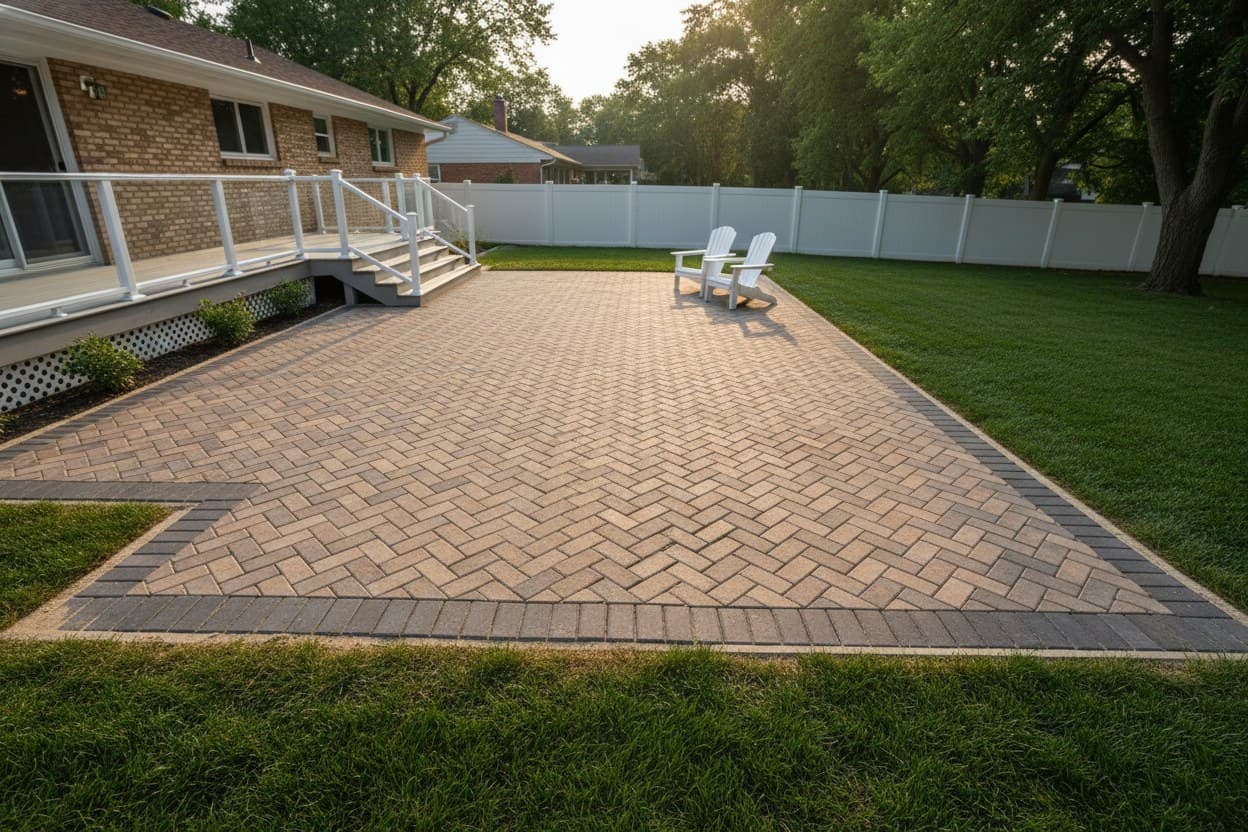
What a Michigan-grade brick paver patio actually is
A residential brick paver patio is a thick aggregate base, an inch of bedding sand screeded flat, the pavers themselves laid in a pattern, edge restraints anchored along the perimeter, and polymeric sand swept into every joint. That sequence is what holds the patio flat through Michigan freeze and thaw. Troy and the rest of Oakland County sit on heavy clay soil that swells when wet and shrinks when dry. A patio installed on 2 inches of base flexes with the clay, settles in corners near downspouts, and grows weeds in the joints. A patio installed to ICPI guidelines on 6 to 8 inches of compacted aggregate rides through the same conditions for 30 years.
The install has five parts that all matter. Step one is excavation: the old surface and topsoil come out down to undisturbed subgrade, sloped a quarter inch per foot away from the house for drainage. Step two is base prep: 6 to 8 inches of crushed limestone goes down, compacted in lifts of 2 to 3 inches with a plate compactor so the base locks together. Step three is the bedding sand: a single inch of coarse sand screeded perfectly flat off the screed rails. Step four is the pavers: laid in the chosen pattern (herringbone is the strongest for vehicle traffic, running bond and basketweave for foot-only), cut to the perimeter, and tamped down with a roller compactor. Step five is polymeric sand: swept into every joint, watered in, and left to cure into a flexible bond that resists weeds and washout. The same excavation and base-prep discipline underpins a proper Driveway installation run off the identical playbook.
The cheap version of this same job skips the base depth (2 inches instead of 6), leaves the edge restraints out, uses mason sand or polymeric sand of the wrong grade in the joints, and pours over native clay without compaction. Each shortcut costs the homeowner a few hundred dollars off the bid and a decade off the patio. The honest version costs more on day one and pays back over the next three decades by keeping every patio paver flat and locked in place instead of needing a re-lay at year 6.
The paver work your backyard actually needs
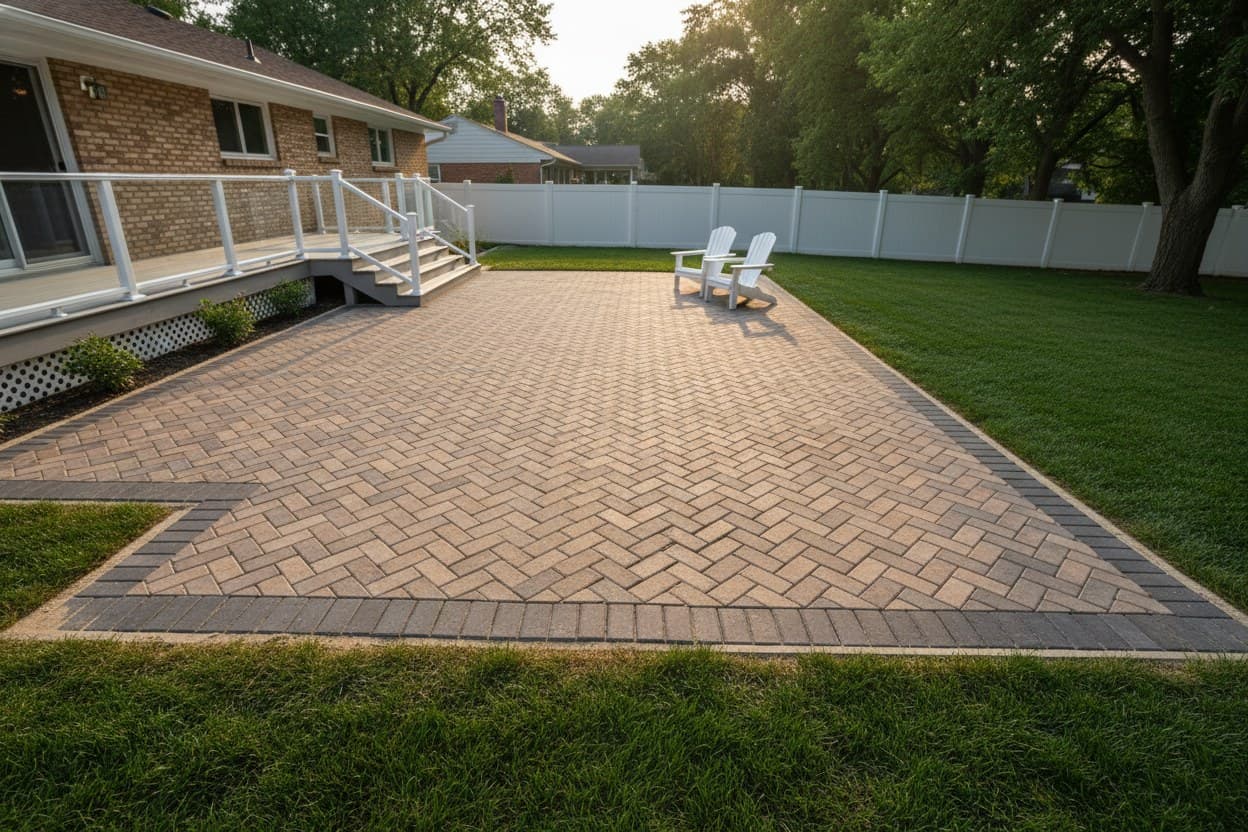
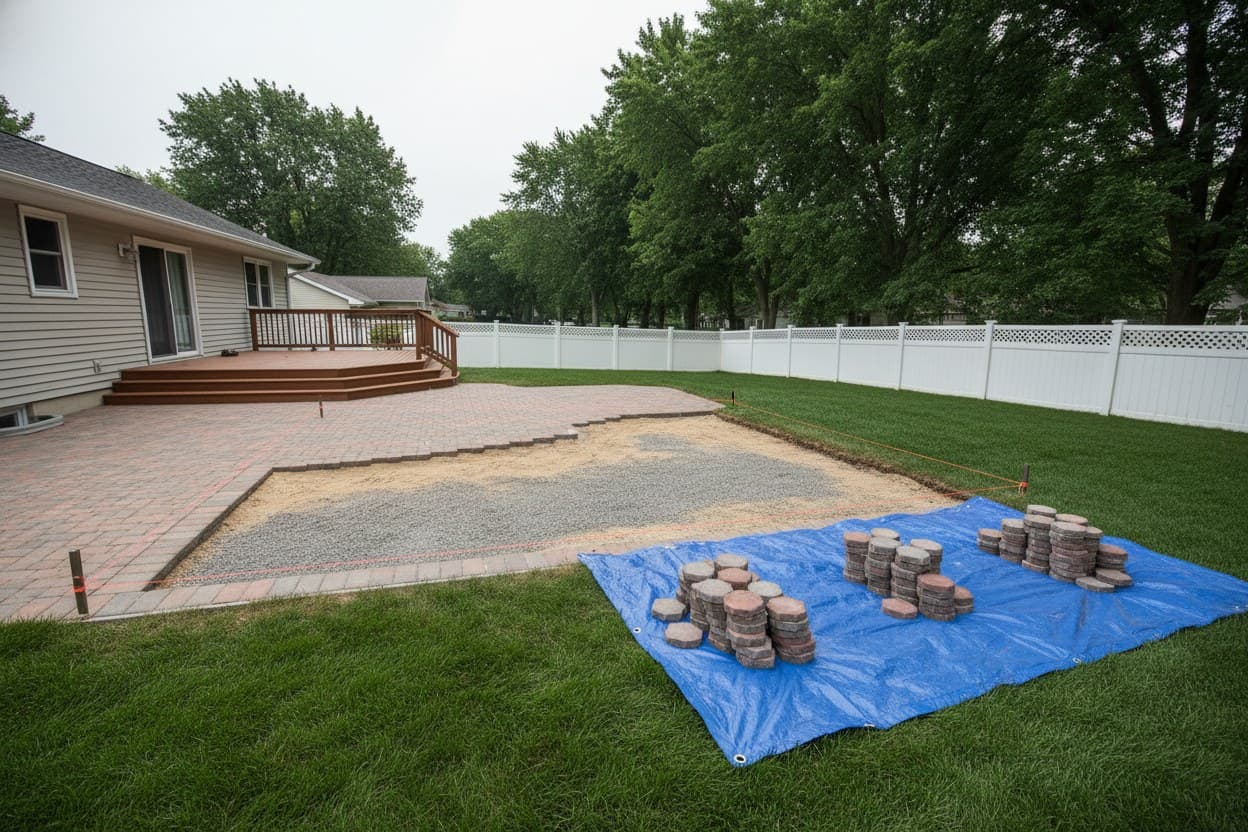
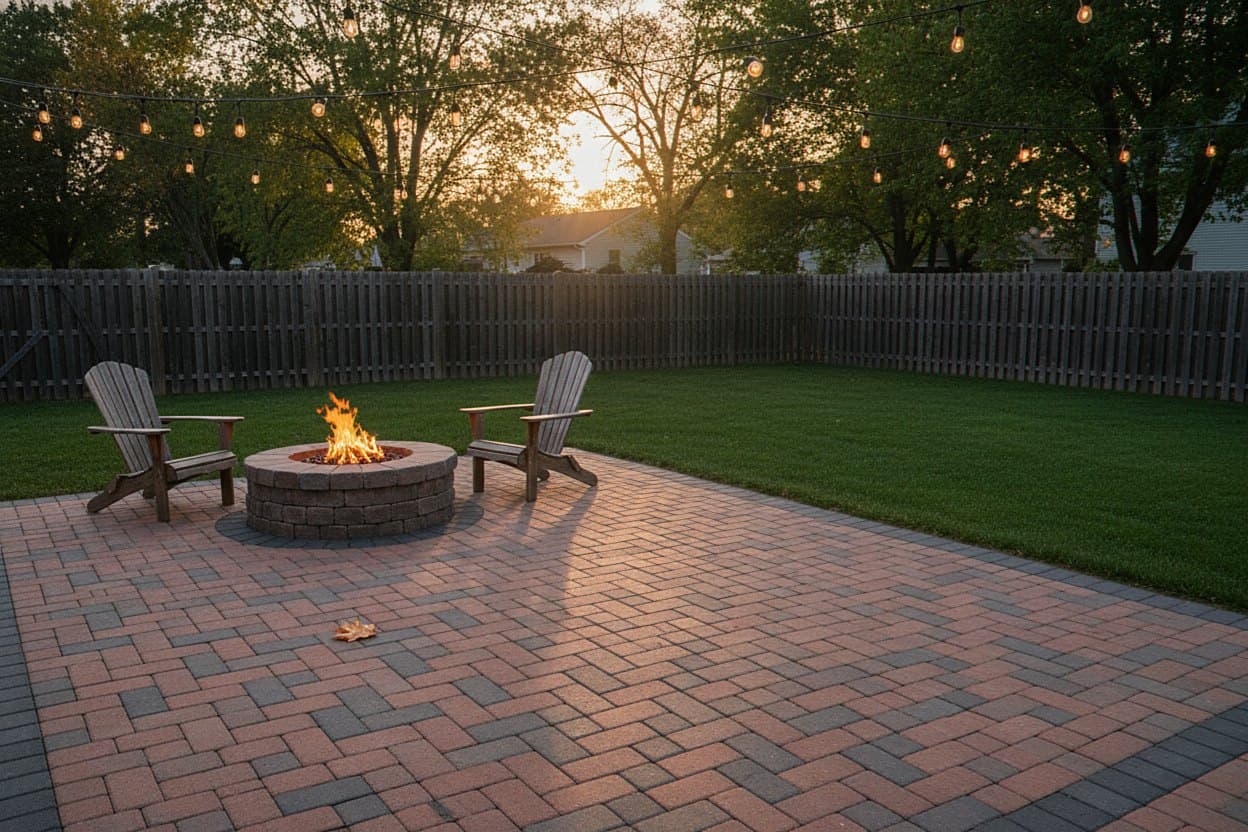
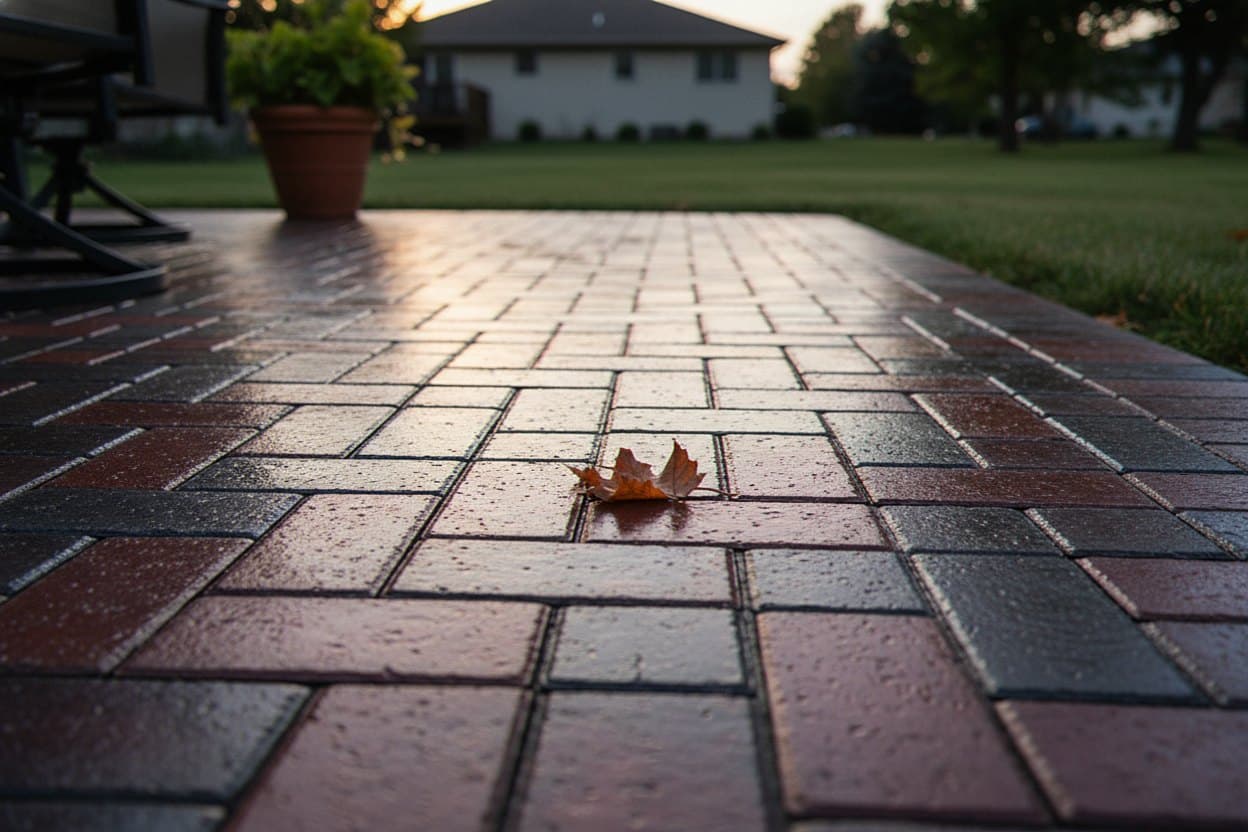
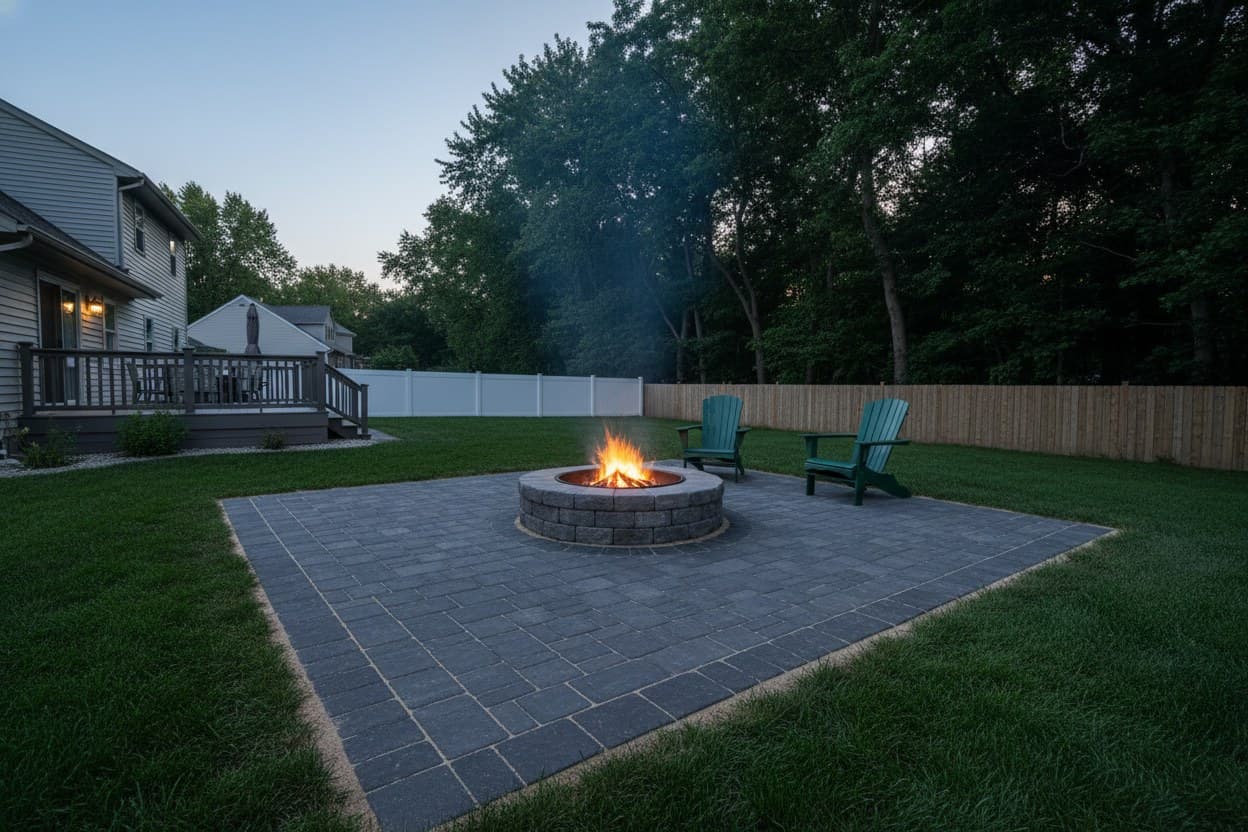
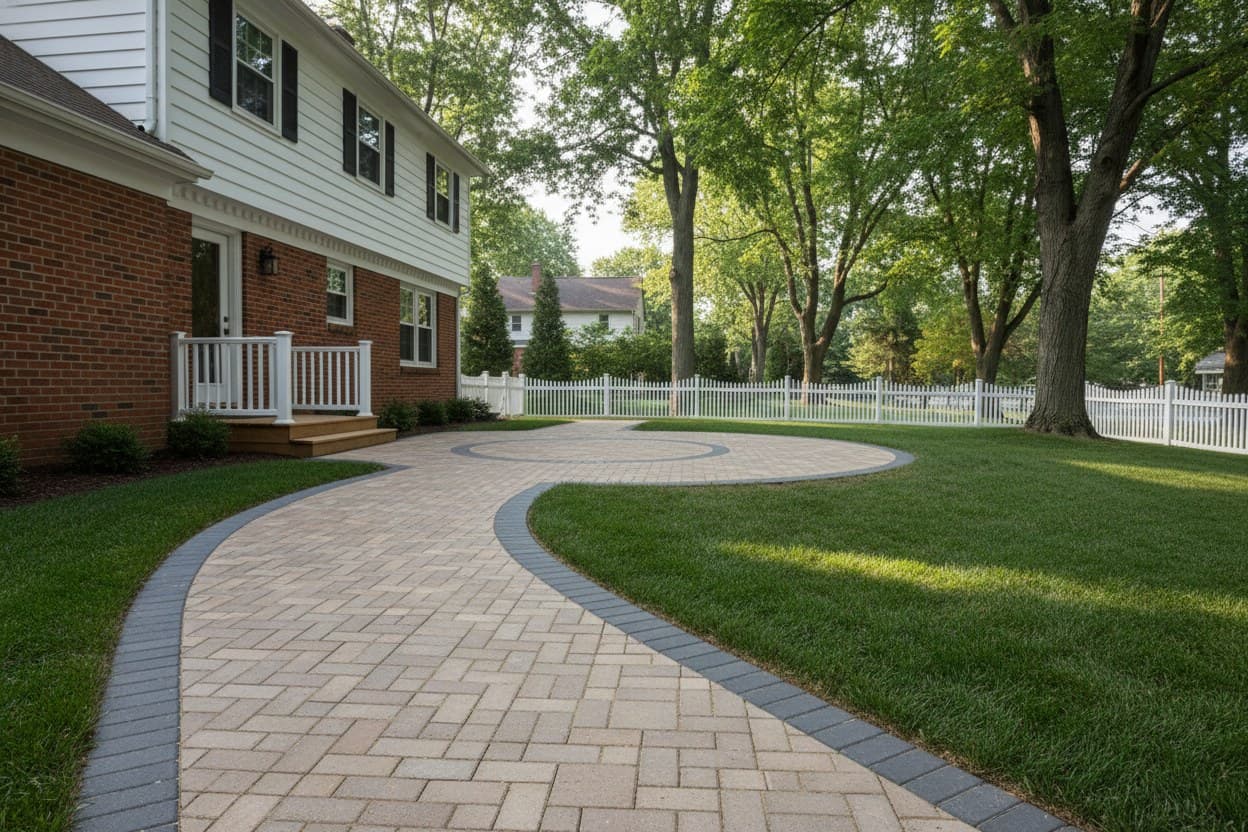
Six paver jobs covered in Troy, MI.
Brick Paver Patio Installation
What a 6 to 8 inch base patio install looks like, start to finish, when the install crew sticks to ICPI guidelines.
See the full job detail →Brick Patio Repair and Re-leveling
When a patio is mostly sound but a corner has settled, a section has heaved, or the joint sand is gone, what targeted repair looks like.
See the full job detail →Paver Patio Replacement
When an old stamped concrete or brick-on-sand patio is past saving, what a full tear out and rebuild to current standards looks like.
See the full job detail →Brick Patio Cleaning, Sanding, and Sealing
When a patio is structurally sound but the surface is faded, joints are washing out, or weeds are pushing through, what a one-day restoration looks like.
See the full job detail →Fire Pit with Paver Patio
A built-in paver fire pit set into a matching patio field, with a steel insert ring for safety and a bullnose cap for the sit-on edge.
See the full job detail →Paver Walkway and Patio Extension
Adding a walkway from the side door to the rear patio, or pushing an existing patio bigger, in the same brand and color as the original. For the driveway and walkway side of a project, a Flemington driveway and walkway contractor handles the excavation and grading.
See the full job detail →Quote on Monday. Patio done by Friday.
Free walk-through
Excavation and base
Sand bed and pavers
Polymeric sand and seal
Questions Troy homeowners ask
How long does a paver patio install take from start to walking on it?
What kind of base do you put down for Michigan freeze and thaw?
Should I replace my stamped concrete patio with pavers, or just resurface it?
How often do I need to redo the polymeric sand between the joints?
Is a wood-burning fire pit safe on top of pavers?
Ready for a real Troy floor?
Send a few photos or book a free 15-minute on-site walk-through. A fixed written quote within one business day.