Brick Paver Patio Installation · Troy

Brick Paver Patio Installation in Troy, MI

What a 6 to 8 inch base patio install looks like, start to finish, when the install crew sticks to ICPI guidelines.

3 to 5 days installs · typical timeline
Free Quote

Free Brick Paver Patio Installation quote.

We reply within 1 business hour. No spam, ever.

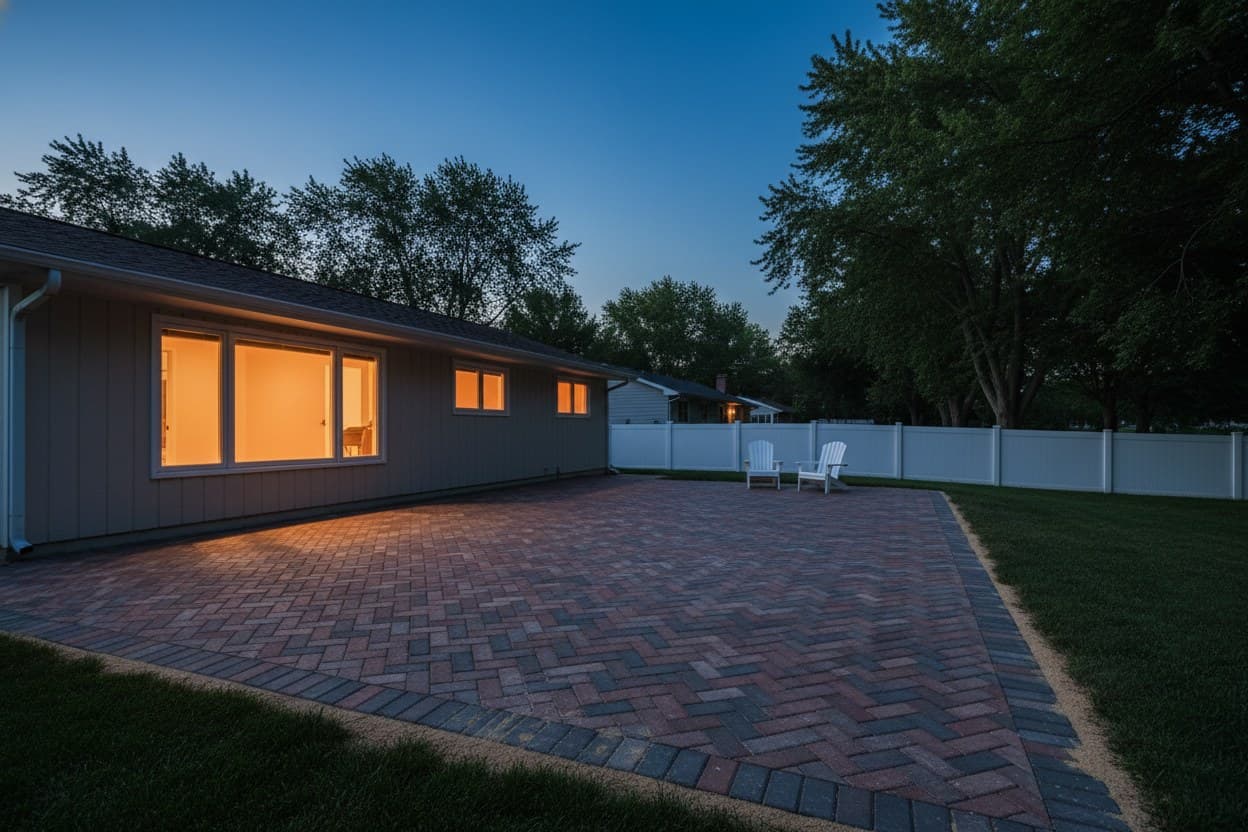
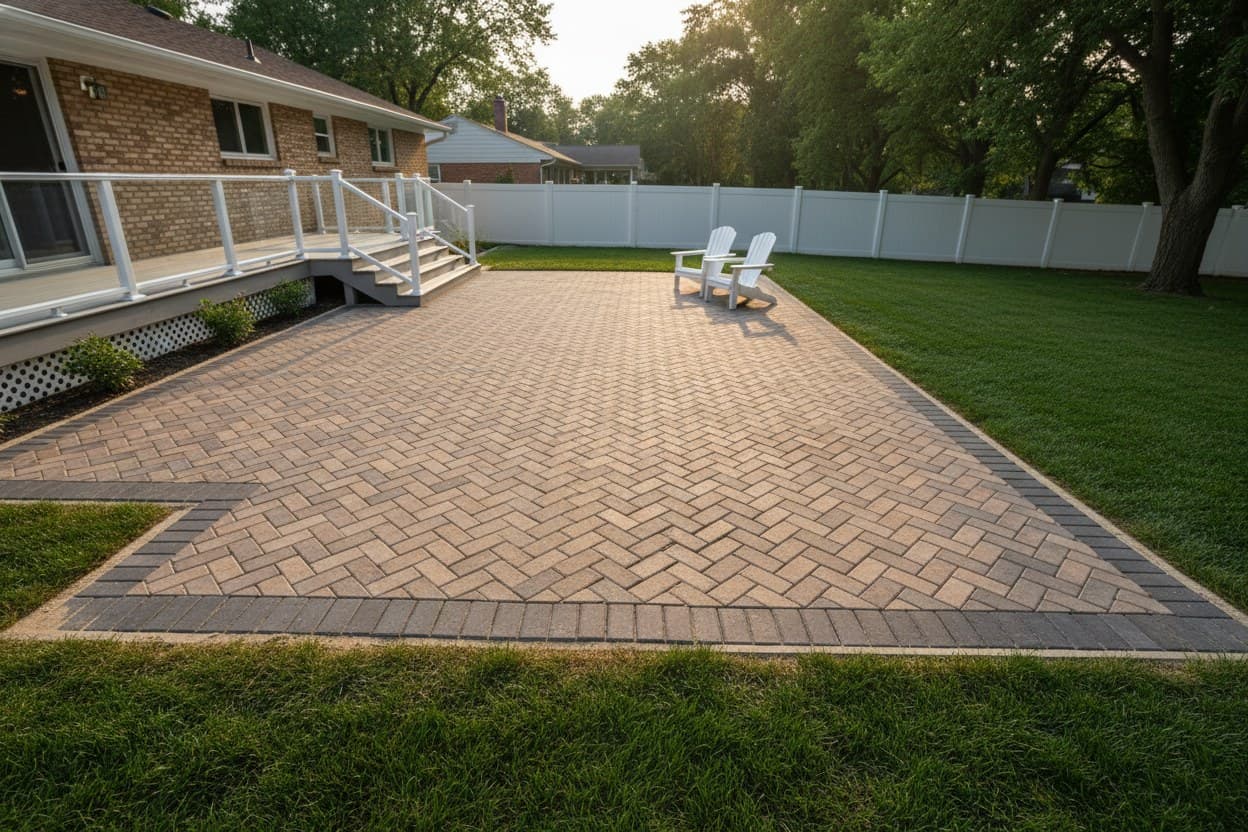
Finished herringbone paver patio off a brick ranch home.
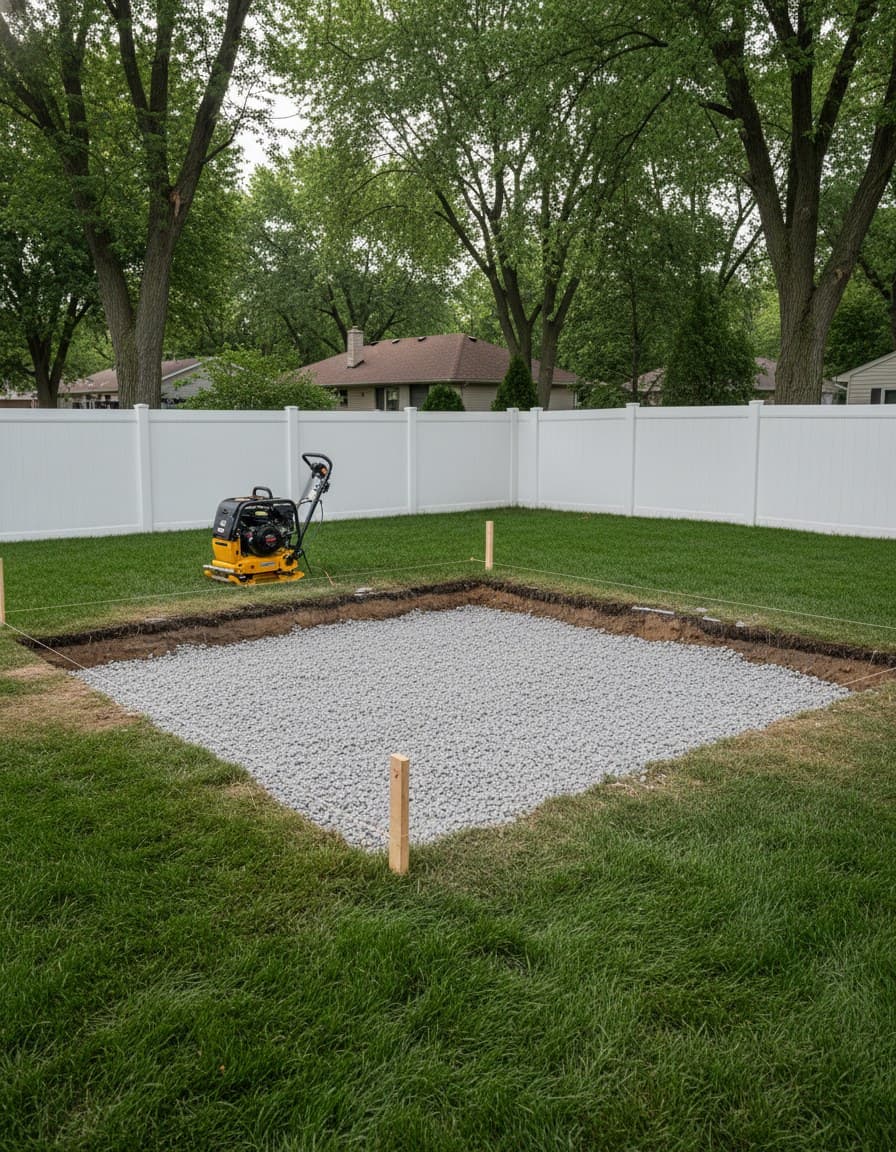
Plate compactor on fresh angular gravel sub-base.
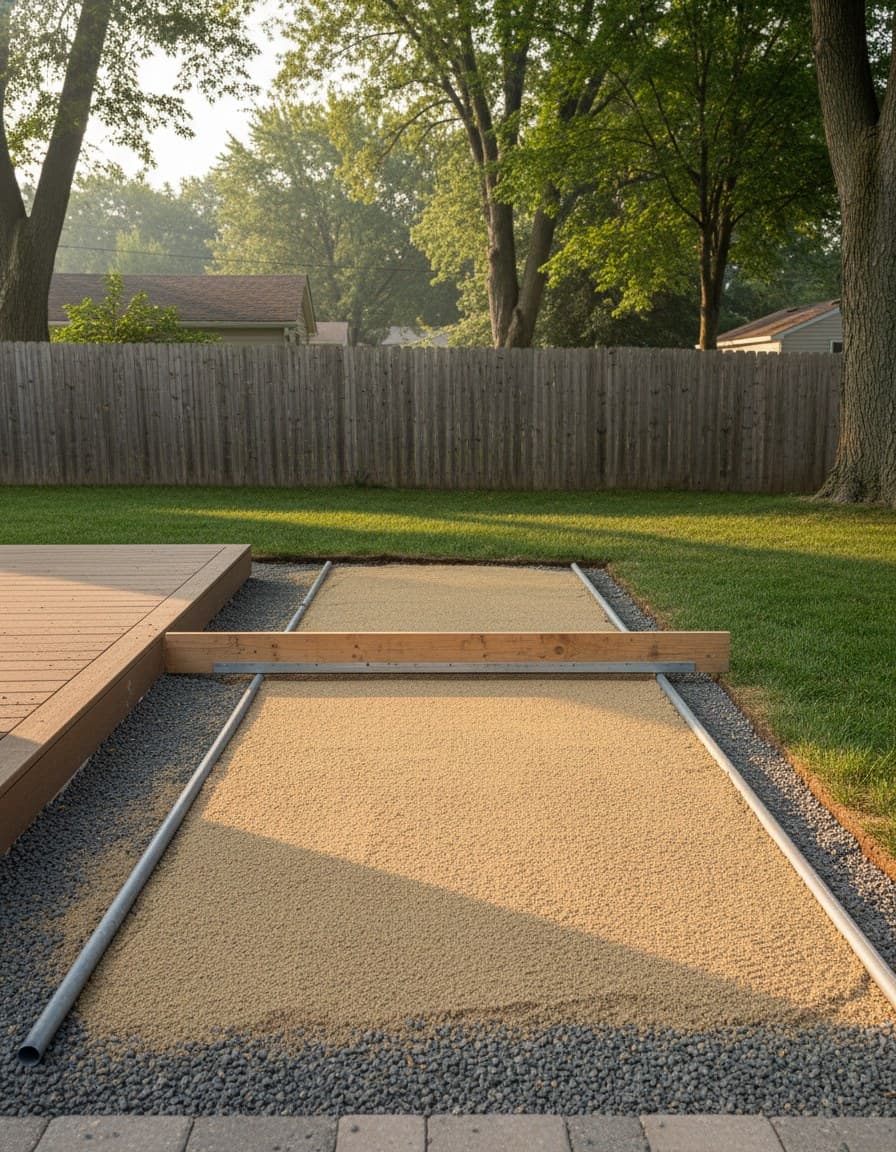
Screed rails set across bedding sand for paver laying.
What we install

What goes into a paver patio that stays flat in Michigan

Most Troy homeowners adding a new paver patio start with one of three site conditions. Either lawn that needs to be excavated down to subgrade, an old wood deck that is coming out, or a failing stamped concrete pad that needs to be broken up and hauled. The site condition changes how much excavation is needed. But the base spec stays the same. A residential patio in Oakland County needs a 6 to 8 inch compacted aggregate base. The pavers themselves can be a 60mm Unilock-style residential paver. Cut perimeter, screeded sand bed, polymeric joint sand. Anything thinner on the base fails inside a few seasons on Michigan clay soil.

A proper paver install runs in a clear sequence. First, the site gets excavated down to undisturbed subgrade and graded with a quarter inch per foot slope away from the house. 6 to 8 inches of crushed limestone (21AA or 22A in Michigan) goes down, compacted in 2 to 3 inch lifts so it locks together. A one inch bedding sand layer gets screeded perfectly flat off rails laid on the base. Pavers go down in the chosen pattern. Herringbone is the strongest, locks under load, and is the right call for any patio that will see a wheelbarrow or a heavy grill. Running bond and basketweave are foot-only and look more relaxed. Perimeter pavers get cut on a wet saw to the patio outline. Edge restraints (plastic L-edge anchored with 10-inch spikes, or a soldier course of pavers set in concrete) lock the perimeter. Polymeric sand gets swept into every joint and watered in. The patio is walkable the same day; full furniture load the next.

  • 6 to 8 inch crushed limestone base compacted in 2 to 3 inch lifts, never a single dump-and-roll pass.
  • One inch screeded bedding sand, never a thicker bed that lets pavers rock under load.
  • Herringbone pattern for any patio with vehicle or heavy-load traffic; running bond or basketweave for foot-only.
  • Anchored edge restraints along every perimeter, never just sand against turf that lets pavers wander.
  • Polymeric sand swept into joints and watered in, never plain mason sand that washes out in two rains.
Most paver patios do not fail because the pavers were bad. They fail because the base was thin or the edges were left to wander.

Troy and the surrounding Oakland County cities (Royal Oak, Birmingham, Bloomfield Hills, Rochester, Rochester Hills, Madison Heights, Clawson) all sit on the same heavy clay soil that wants to settle around any foundation that is not on a deep aggregate base. Reputable paver contractors in this area write the base depth, the paver brand, the joint sand type, and the edging method directly into the quote, not as a verbal promise. A bid that just says paver patio with a price is the one missing the layers that matter.

If the project is a brand new paver patio on a Troy lot, the form or the phone number above goes to a local paver contractor who handles the whole job, from excavation through the polymeric sand sweep. Free walk through and a fixed written quote inside one business day.
Materials

The five layers of a paver patio, and why each one is there

The first layer is the subgrade. Most Oakland County yards sit on heavy clay that swells when wet and shrinks when dry. A patio laid directly on raw clay flexes with the soil and settles in corners that catch downspout water. So the subgrade gets excavated down to undisturbed soil, graded for drainage at a quarter inch per foot away from the house, and compacted with a plate compactor before any aggregate goes down. The second layer is the aggregate base. 6 to 8 inches of crushed limestone, sized 21AA or 22A, placed in 2 to 3 inch lifts and compacted between each lift. Skipping the lifts and dumping all 6 inches at once only compacts the top layer; the rest stays loose and settles the first winter. The base is what carries the load. The pavers just sit on top.

The third layer is the bedding sand. One inch of coarse concrete sand or paver sand, screeded perfectly flat off rails set on the compacted base. More than an inch lets pavers rock under load. Less than an inch makes leveling impossible. The fourth layer is the pavers themselves. Standard residential pavers are 60mm thick, manufactured by Unilock, Belgard, Techo-Bloc, or Cambridge, in a herringbone, running bond, or basketweave layout. The cuts at the perimeter happen with a wet saw to keep joint lines clean. The fifth layer is the joint sand. Polymeric sand is the modern standard. It contains a polymer that activates when watered, binding the sand into a flexible plug that resists weeds, ants, and washout. Regular mason sand in the joints is the most common cheap shortcut. It looks identical on day one and washes out by the second rain.

  • 6 to 8 inch crushed limestone base, placed and compacted in 2 to 3 inch lifts.
  • One inch screeded bedding sand, never a thicker bed that lets pavers rock.
  • 60mm Unilock, Belgard, Techo-Bloc, or Cambridge residential pavers.
  • Anchored edge restraints along every perimeter, plastic L-edge or concrete soldier course.
  • Polymeric sand joints watered in to bind, never mason sand that washes out.
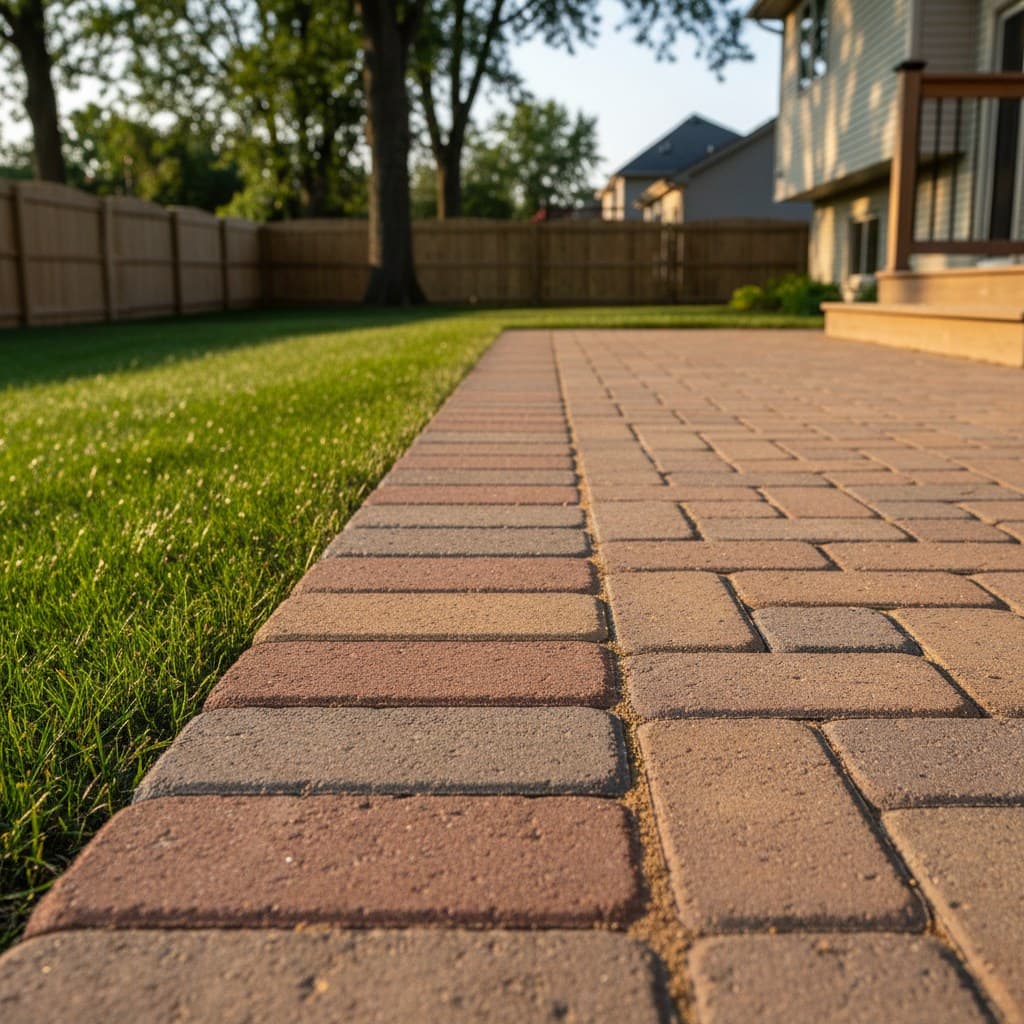
Charcoal pavers laid in herringbone pattern, mid-install.
Plastic edge restraint anchored with 10-inch spikes.
What about the alternatives?

What homeowners weigh against a brick paver patio

When adding a patio, most Troy owners compare a few obvious alternatives before settling on the right one. The honest version of how each option performs in Oakland County is below.

Poured concrete patio (plain broom finish)

Cheaper on day one if the slab is thin. Cracks at random across heavy clay soil unless poured to driveway spec. Limited repair options when a corner sinks.

Acceptable

Stamped concrete patio

Decorative finish on a poured slab. Looks great on day one. Sealer wears off every 2 to 3 years. Slab cracks are visible through the stamp pattern. Hard to repair invisibly.

Acceptable

Loose flagstone on sand

Cheapest install. Stones rock under foot, joints fill with weeds, and the surface is rough for chairs and tables. Acceptable for a garden path, not a real patio.

Skip

Wood deck (replacement option)

Higher cost. Needs staining or sealing every 2 to 3 years. Lifespan 15 to 20 years before structural rebuild. Better when grade requires elevation off the ground.

Acceptable

Brick paver patio on a 6 to 8 inch base

The job described above. 60mm pavers on a deep aggregate base with polymeric sand joints. Lifts and re-lays cleanly if a section ever settles. Lasts 30 years.

Recommended
How it goes

From quote to walk-on, fast.

01

Free walk-through

02

Excavation and base

03

Sand bed and pavers

04

Polymeric sand and seal

Before you book

Things to confirm before signing a paver patio contract

Reputable paver contractors in Troy will answer all of these directly in the on-site walk through. If a bidder pushes back on any of them, that is the signal to keep looking.

How deep is the base and what material is it?
6 to 8 inches of crushed limestone (21AA or 22A in Michigan), compacted in 2 to 3 inch lifts with a plate compactor. Pea gravel is not a substitute, native clay is not a substitute, and a single 3 inch lift dumped and rolled once is not a substitute. The base spec belongs in the written quote, not as a verbal promise.
What paver brand are you installing and is it 60mm?
Standard residential pavers are 60mm thick, from Unilock, Belgard, Techo-Bloc, or Cambridge. All four are quality manufacturers with lifetime structural warranties on the paver itself. The brand and model number belong in the quote so the homeowner knows what is going down. Thinner pavers (45mm) exist for foot-only walkway use and are not appropriate for a patio that will see a heavy grill, fire pit, or wheelbarrow traffic.
Are you using polymeric sand in the joints?
Yes for any patio that will not see daily heavy washing. Polymeric sand contains a polymer that activates with water and binds the sand into a flexible plug. It resists weed growth, ant tunneling, and washout. The alternative is regular mason sand, which is cheaper on the bid but washes out in two rains and grows weeds in the second season. The poly sand brand and color belong in the quote.
How are the edges held in place?
Plastic L-edge restraint anchored with 10 inch spikes every 12 inches along the perimeter, or a soldier course of pavers set in a concrete bond beam at the perimeter. Pavers against turf with no restraint will spread sideways under load and let the field shift. The edging method belongs in the quote.
What time of year is the install scheduled?
The active install window in Michigan runs mid-April through November, once the ground is thawed and workable. Heavy spring rain can delay starts; heavy snow ends the season. Booking the walk through in February or March for an April or May start is the smoothest path. Booking in July typically pushes the install to August or September.
Aftercare

How a new paver patio stays a 30 year paver patio

A residential paver patio needs less maintenance than concrete and far less than a wood deck. But the few things it needs are not optional. Sweep new polymeric sand into the joints every 3 to 5 years as the original sand wears down. Pressure wash on a low setting once a year in spring to lift winter grime; high pressure blasts the joint sand out. Pull any weeds that find a gap in the polymeric sand and re-sweep that joint. Watch the edge restraints and re-anchor any spike that has worked loose. If a corner settles more than a half inch, the contractor can pull that section, top up the base, and re-lay the pavers in a day. The whole patio does not need to come up.

  • Sweep fresh polymeric sand into the joints every 3 to 5 years; water it in to re-bind.
  • Low-pressure rinse once a year in spring; never high pressure, which blasts joint sand out.
  • Pull any weeds that find a joint gap immediately, then re-sweep poly sand into that joint.
  • Re-anchor any edge restraint spike that has worked loose, especially at corners.
  • Lift and re-lay any section that settles more than a half inch rather than letting the whole patio shift.
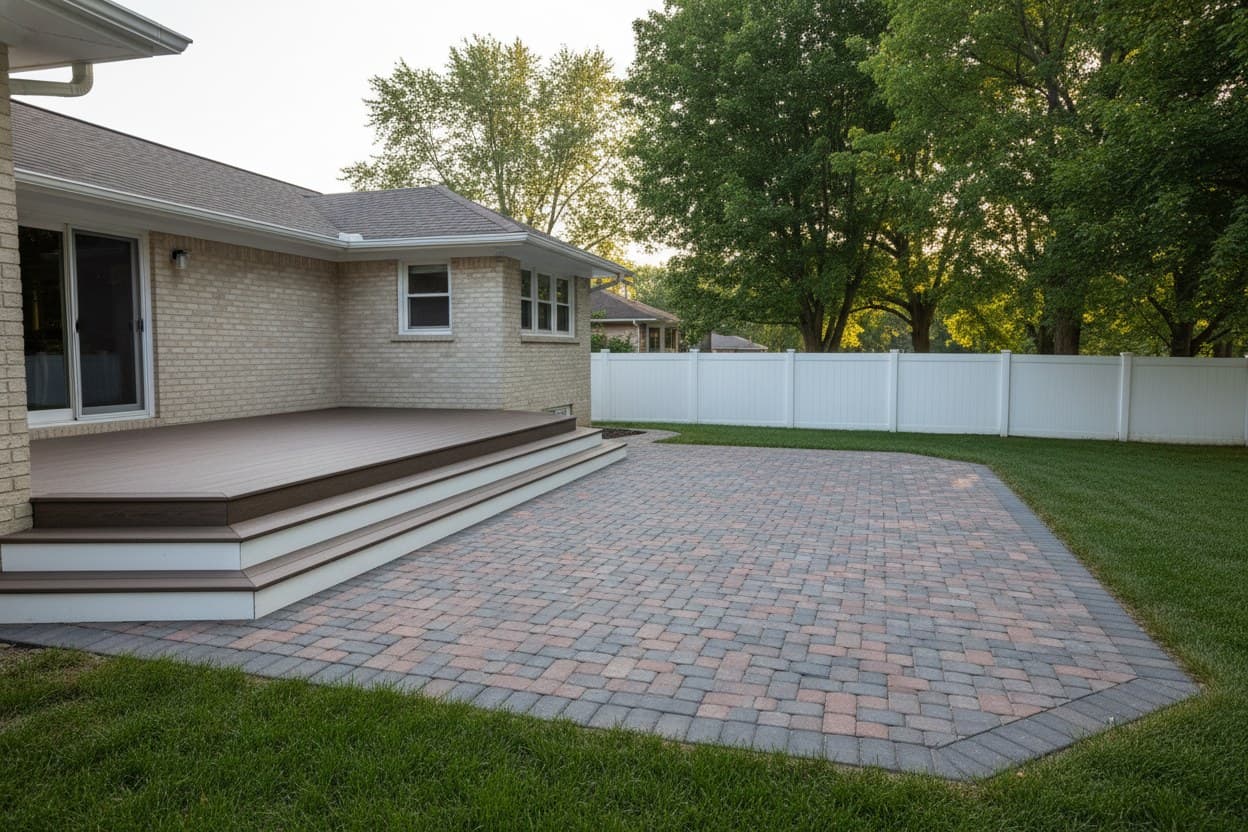
Wide finished paver patio with backyard backdrop.
FAQ

Questions Troy homeowners ask about new patios

How long does a paver patio install take from start to walking on it?
Most residential paver patio installs in Troy run 3 to 5 days from excavation to polymeric sand sweep. Day one is excavation and base. Day two and three are bedding sand and paver laying. Day four is cuts and edge restraints. Day five is polymeric sand and watering it in. The patio is walkable the same evening the poly sand is set. Light furniture comes back the next day. Heavy items (grill, planters, table) by the end of the install week.
What kind of base do you put down for Michigan freeze and thaw?
6 to 8 inches of crushed limestone (21AA or 22A in Michigan), placed in 2 to 3 inch lifts and compacted between each lift with a plate compactor. That depth is what holds the patio flat against heavy clay soil that swells when wet and shrinks when dry, and against the 50 plus freeze and thaw cycles a Michigan patio sees between November and April. Cutting the base depth to 2 or 3 inches is the most common cheap shortcut and shows up as settling inside the first 2 winters.
Should I replace my stamped concrete patio with pavers, or just resurface it?
Depends on the structural condition of the underlying slab. If the stamped concrete is cracked through into multiple pieces, tilting in sections, or showing surface spalling across the field, resurfacing throws good money after bad and a full tear out plus paver install is the honest path. If the slab is still flat, mostly intact, and only the surface color has worn off, a cement overlay or a re-stamp can restore the look for less. The walk through includes an honest read on which path the slab needs.
How often do I need to redo the polymeric sand between the joints?
Every 3 to 5 years on a residential paver patio in Oakland County. Polymeric sand contains a polymer that activates with water and binds the sand into a flexible plug. The polymer wears down under UV exposure and freeze-thaw cycling. After 3 to 5 years, the joints start to lose bind, weeds find gaps, and the surface looks tired. A one-day re-sweep refreshes the field and the patio looks 5 years younger.
Is a wood-burning fire pit safe on top of pavers?
Yes, with a steel insert ring inside the block ring. A built-in paver fire pit needs three layers: a retaining-wall block ring stacked 3 to 4 courses high, a steel insert ring inside that ring to take the direct heat, and a paver brick or steel floor at the bottom to protect the aggregate base from ember contact. A wood fire directly on pavers, with no steel insert and no protective floor, scorches the pavers within a few burns and cracks the aggregate base over time. The built-in version with the insert is the safe long-term answer.
Ready when you are

Ready for a real Troy floor?

Send a few photos or book a free 15-minute on-site walk-through. A fixed written quote within one business day.

Get a free quoteCall (947) 216-2879
CallFree Quote